
Recipe Books Printed For Real Kitchen Use
A recipe book is more than a pretty keepsake. It has to open flat enough for a cook to follow a method, hold up to hands with flour or oil on them, and stay readable under kitchen light. We print cookbooks, recipe collections and branded food booklets for publishers, chefs, schools, churches and community fundraising teams across South Africa.
For a small run, a cookbook might be a 40 page saddle stitched booklet with a gloss cover. For a retail title or charity sale item, perfect binding or section sewing is usually better because it gives the book more spine strength and a neater shelf look. If you need a premium gift edition, case binding and foil finishing can be added too.
Sizes, Page Counts And Binding Choices
Most recipe books are printed in A4, A5 or square formats. A4 gives space for full page photography and step-by-step methods. A5 is easier to handle in a home kitchen or at a market stall. Square sizes work well for food imagery and plated dishes. We also set up custom trim sizes when a publisher wants something more specific, such as a 210 x 210 mm collector's edition.
- Saddle stitching suits shorter books, usually 8 to 64 pages
- Perfect binding suits medium and thicker books from about 48 pages upwards
- Section sewing is a good choice for books that must open well and last longer
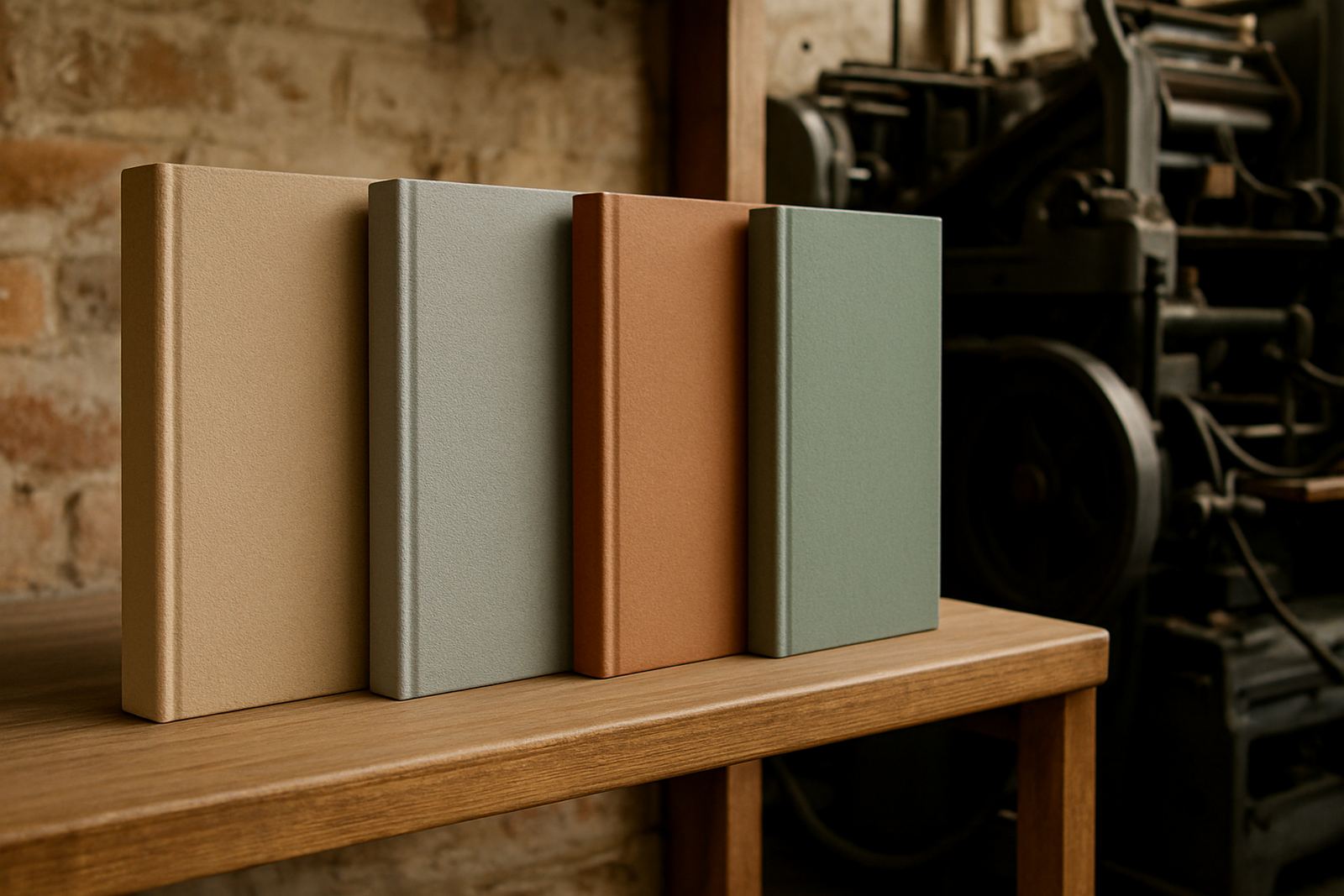
- Case binding is used for hard cover recipe books and gift editions
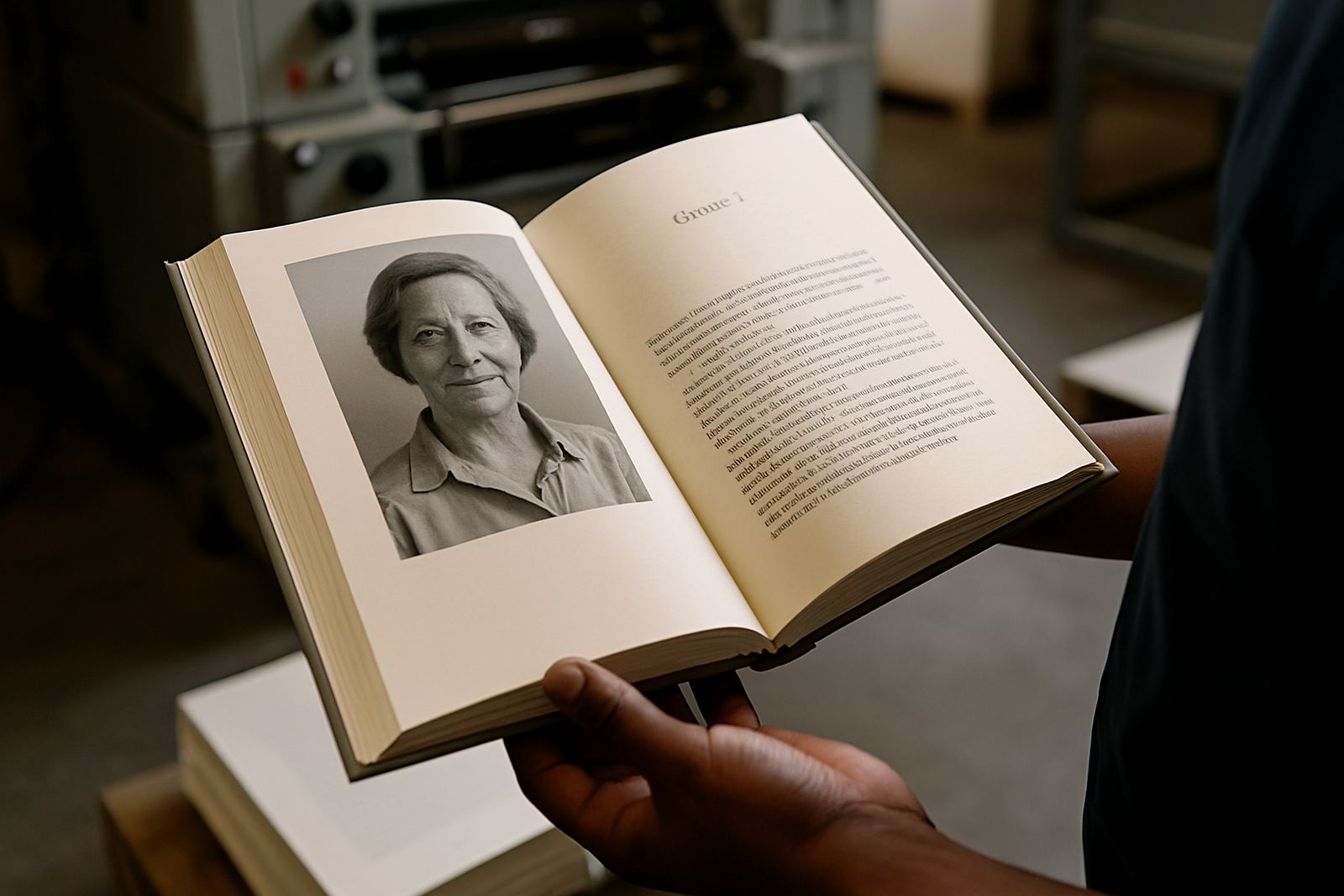
Our team checks the paper weight, spine width and image bleeds before print so the finished book folds and trims correctly. That matters on books with many photos, because a small shift can change how dishes sit on the page.
Paper, Colour And Finishing For Food Titles
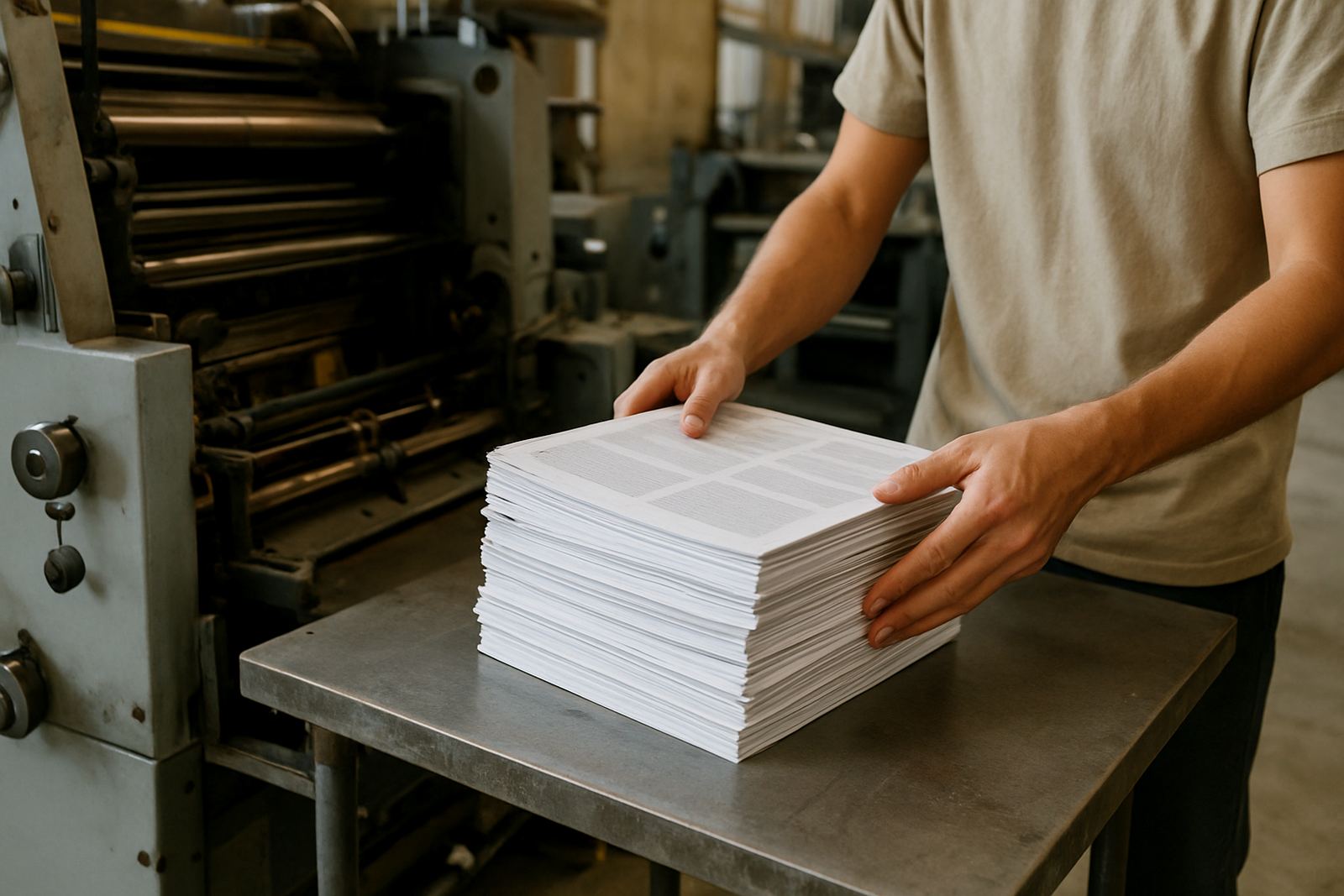
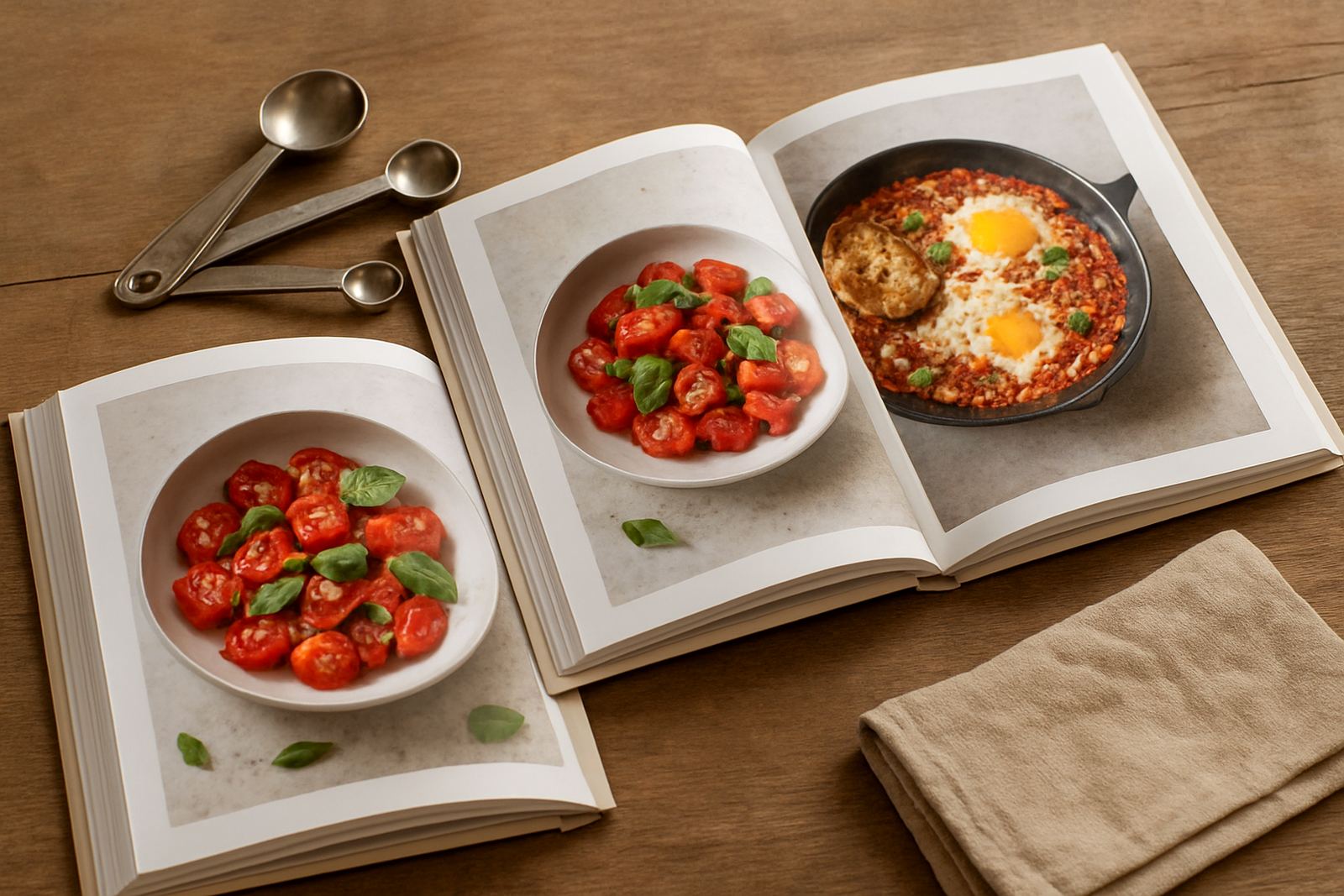
Food books usually need strong colour on tomatoes, herbs, sauces and plated dishes. We use offset printing for steady colour over larger runs and flexo printing where a project needs a different production method for covers, wraps or related packaging items. Before print, prepress checks make sure the files are sized correctly and that black text, skin tones and food photography reproduce clearly.
Popular finishing choices include cover lamination for moisture resistance, foil finishing for titles and limited editions, and die cutting when a special shape or window is required. For inside pages, matt art or uncoated paper is often chosen depending on whether the book is meant for presentation, classroom use or heavy handling. A glossy cover may look smart, but in a busy kitchen a matt laminate can be easier to grip.
- Matte or gloss lamination for cover protection
- Foil accents for premium titles and gift books
- Die cuts for tabs, windows or promotional inserts
- Colour proofing before full production when accuracy matters
Where Recipe Books Work Best
Recipe books suit many South African uses. Chefs use them for restaurant specials, tasting menus and training material. Food brands use them for customer gifts, product launches and point of sale campaigns. Schools and community groups use them for fundraiser sales because a book with local recipes and family favourites is easy to sell to supporters. Publishers also use them for cookbook ranges, magazine spin-offs and seasonal compilations.
In Johannesburg, Pretoria and the East Rand, we often print short runs for corporate gifting, while larger national projects may go out to retailers, publishers and distributors in Cape Town, Durban and other towns. If your audience is coastal, we can recommend a finish that copes better with humidity. If the book will be used in a catering kitchen, we usually suggest stronger binding and a cover that wipes clean.
Production, Delivery And What The Book Needs On Site
Printed recipe books do not need installation, power or gas. What they do need is a sensible plan for storage, packing and handover. If the books are being used at an event, launch or fundraiser, keep them in a dry area away from steam, direct sun and grease splatter. A boxed carton of books can pick up damp quickly in coastal areas, so storage matters more than most people expect.
For dispatch, we pack and label to suit the order size and destination. If you need delivery to a publisher, warehouse or fundraising team, we can arrange transport nationwide from Industria. Give us clear details on stair access, loading bay limits and any municipal or estate delivery rules, because some sites in Sandton, Midrand and Pretoria have strict receiving times. That helps avoid delays and extra handling.
- No power connection required for the finished books
- No gas, water or special installation needed
- Store flat in a cool dry room
- Avoid stacking directly on floor level in damp spaces
What To Check Before You Order
The best recipe books start with clean content and clear production details. Before you send files, check the final trim size, page count, image resolution and spelling in recipes, ingredients and contributor names. Make sure unit measurements are consistent, whether you use grams, millilitres, cups or spoons. If the book will be sold retail, leave space for barcode placement and any legal or ISBN details your publisher needs.
It also helps to think about how the book will be used. A fundraising cookbook may need a low-cost binding and a durable cover. A chef's menu collection may need premium paper and a stronger spine. If the recipes are heavily illustrated, ask for a proof so you can check flesh tones, sauce colour and image contrast before we run the full job. One missed comma in a recipe can change the whole method, so copy checks are worth it.
Care And Servicing After Print
Recipe books are simple to look after, but a few basic habits help them last longer. Keep them away from sinks, ovens and open flames, and do not leave them lying open near steam. If a book is for daily kitchen use, a laminated cover and sewn binding will hold up better than a light booklet. For collector editions, keep them upright on a shelf with enough support so the spine does not bow.
If you are reordering the same title later, keep the approved file set, print specs and colour references together. That makes repeat runs faster and keeps page order, cover finish and trim size consistent. Our production and bindery team can advise on reprints, revised editions and updated contributor pages when your recipe collection grows.
Key facts
| Common sizes | A4, A5, square formats and custom trims |
|---|---|
| Binding options | Saddle stitch, perfect binding, section sewing, case binding |
| Typical page range | 8 to 200+ pages depending on binding |
| Print methods | Offset printing and flexo printing |
| Finishes | Matt or gloss lamination, foil finishing, die cutting |
| Delivery area | Nationwide from Industria, Johannesburg |