
What independent authors usually need from print
Most self-published authors need more than a press that can put ink on paper. They need clean prepress checks, sensible paper advice, a binding method that suits the page count, and a finish that looks ready for bookshops, launch tables and direct sales. We work with authors who are printing 100 copies for a launch as well as those ordering 1,000 or more for wider distribution.
In Johannesburg, authors often want stock ready for a launch event in Sandton, a market table in Randburg, or courier delivery to Cape Town, Durban and Gqeberha. That means planning around lead times, carton sizes, moisture protection and the realities of transport. A good print job should arrive flat, square and easy to sell.
Choosing the right print method for your run
The best print method depends on quantity, page count and whether your title needs a consistent colour cover or a heavier image-led interior. Offset printing is usually the right choice for repeatable quality and stronger unit pricing on medium to larger runs. Flexo printing can suit specific packaging or wrap components, while the book itself is normally planned around offset pages, a printed cover and one of the binding options below.
- Offset printing: best for steady quality and larger runs.
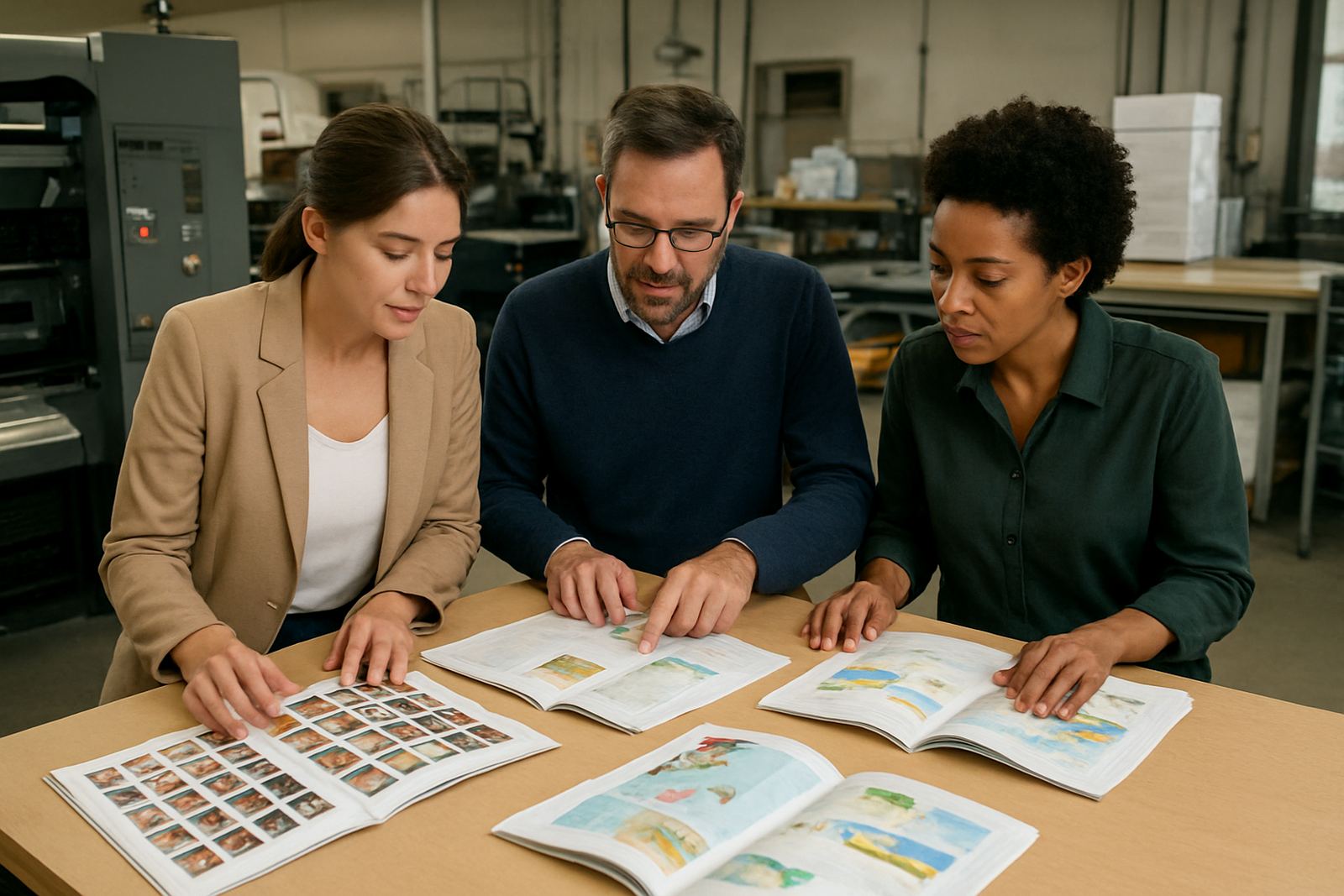
- Colour proofing: useful when you need to check cover tone, photos or brand colours before the full run.
- Prepress checks: catches bleed, trim, image resolution and page order issues before plates are made.
- Packing and dispatch: keeps books protected for local delivery or national courier movement.
If your book is text-heavy, the paper choice can make a big difference to feel and cost. Lighter stock keeps the book easier to handle and cheaper to courier, while thicker stock may be better for art books, children’s titles or premium editions.
Binding options that suit different book types
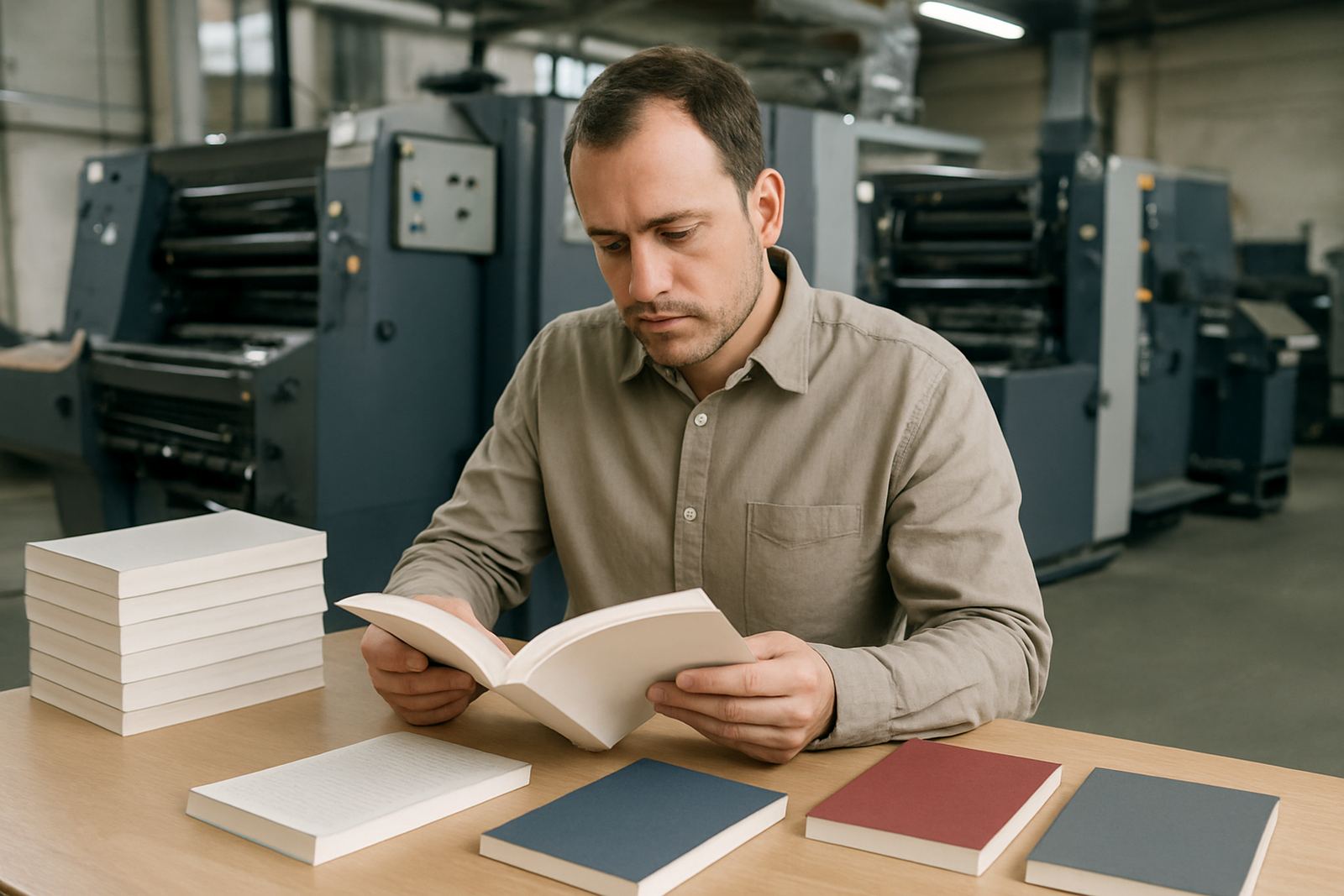
The binding method should match the page count, intended retail price and how the book will be used. A poetry collection or short story title may suit saddle stitching if the page count is low enough. A novel or business title often works better with perfect binding. For a premium edition, case binding gives a harder cover and a more formal shelf presence.
We also handle section sewing for books that need stronger opening performance and long term durability. That is useful for titles that will be handled often, moved between venues, or kept in libraries and offices. Cover lamination and foil finishing can help the book stand out at a launch without making it impractical to store or ship.
- Saddle stitching: best for shorter books and booklets.
- Perfect binding: common for novels, manuals and longer titles.
- Case binding: suited to premium editions and gift books.
- Section sewing: adds strength for books that need to open well and last.
Artwork planning and layout guidance before files go to print
Independent authors often lose time and money on avoidable layout issues. Before final artwork is sent, make sure the page count works with the binding choice, the spine width is calculated correctly, and the cover includes enough space for trim and wrap. If the book has black and white interiors, keep image files clean and at a proper resolution so faces, diagrams and line art print clearly.
It also helps to plan the back cover copy early. Leave space for the blurb, barcode area if needed, and any publisher details required by your distribution channel. If the book will be sold through launch events in Pretoria, at a Midlands festival or via a courier network, the finished size should be easy to stack and carry. Small practical choices matter here, and a last minute change can add cost.
- Confirm final page count before cover layout starts.
- Keep margins generous so text does not sit too close to the trim.
- Check that all photos, illustrations and logos are embedded correctly.
- Allow time for a proof, especially on colour covers.
Common mistakes that push up the final cost
The most common mistake is ordering a quantity that is too small for the unit price you want, then having to reprint quickly after launch. Another issue is leaving the spine calculation until the end, which can lead to a cover rework. Some authors also underestimate the effect of paper weight, which changes both the look and the courier cost.
We also see problems with rushed corrections after prepress approval. Once the file is signed off, changing one line of text can affect the plates and the schedule. In peak season, that can mean a delay to your launch date. It is better to build in a little buffer time and one final proof check, even if the title is already late from the editing side.
Load-shedding, heavy rain and coastal humidity can all affect how quickly a print run moves through production and dispatch, so planning ahead matters. For authors sending books to Durban, East London or the Western Cape, strong packing and sensible timelines help protect the result.
Budget ranges for self-published book runs
Budgets vary by size, paper, page count, binding and finish. As a general guide, a short black and white title with simple perfect binding will cost far less per copy than a full colour title with lamination, foil and case binding. The best way to manage spend is to decide what the book needs to achieve, then match the finish to that purpose instead of adding extras that do not support sales.
For many independent authors, the practical range looks like this: a small launch run may start in the low thousands of Rand, while a higher quality title with better binding and finish can move into the mid to high tens of thousands. If you are comparing options, ask for pricing on 100, 250 and 500 copies so you can see where the unit cost drops. That usually gives a clearer picture than only looking at one quantity.
- Short launch run: often from about R3,500 to R12,000 depending on specs.
- Mid-size print run: often from about R12,000 to R35,000.
- Premium edition: can run well beyond that when case binding, foil or heavy colour are included.
How Printing House supports authors from proof to dispatch
Our Industria base gives us a practical position for serving Johannesburg Central, Sandton, Randburg, Roodepoort, Midrand, Pretoria and the East Rand, while still dispatching books nationwide. The team covers prepress checks, production planning, press work, bindery, packing and dispatch so your title moves through in a controlled way. Busisiwe Motaung oversees production flow, Johan van der Merwe handles prepress checks, and Siyanda Ramaboa manages client communication through the enquiry form process.
Oupa Hlungwani leads the business, with Farieda Adams coordinating bindery, Siphamandla Ngwenya running press operations, and Leanne Naidoo planning logistics. That matters when you need books ready for a book signing, a church sale, a conference table or direct customer orders. If your title is nearly ready, confirm your page count, binding choice and target quantity so we can guide the best print route for your launch.