
Comic Printing That Keeps Panels Clear And Colour True
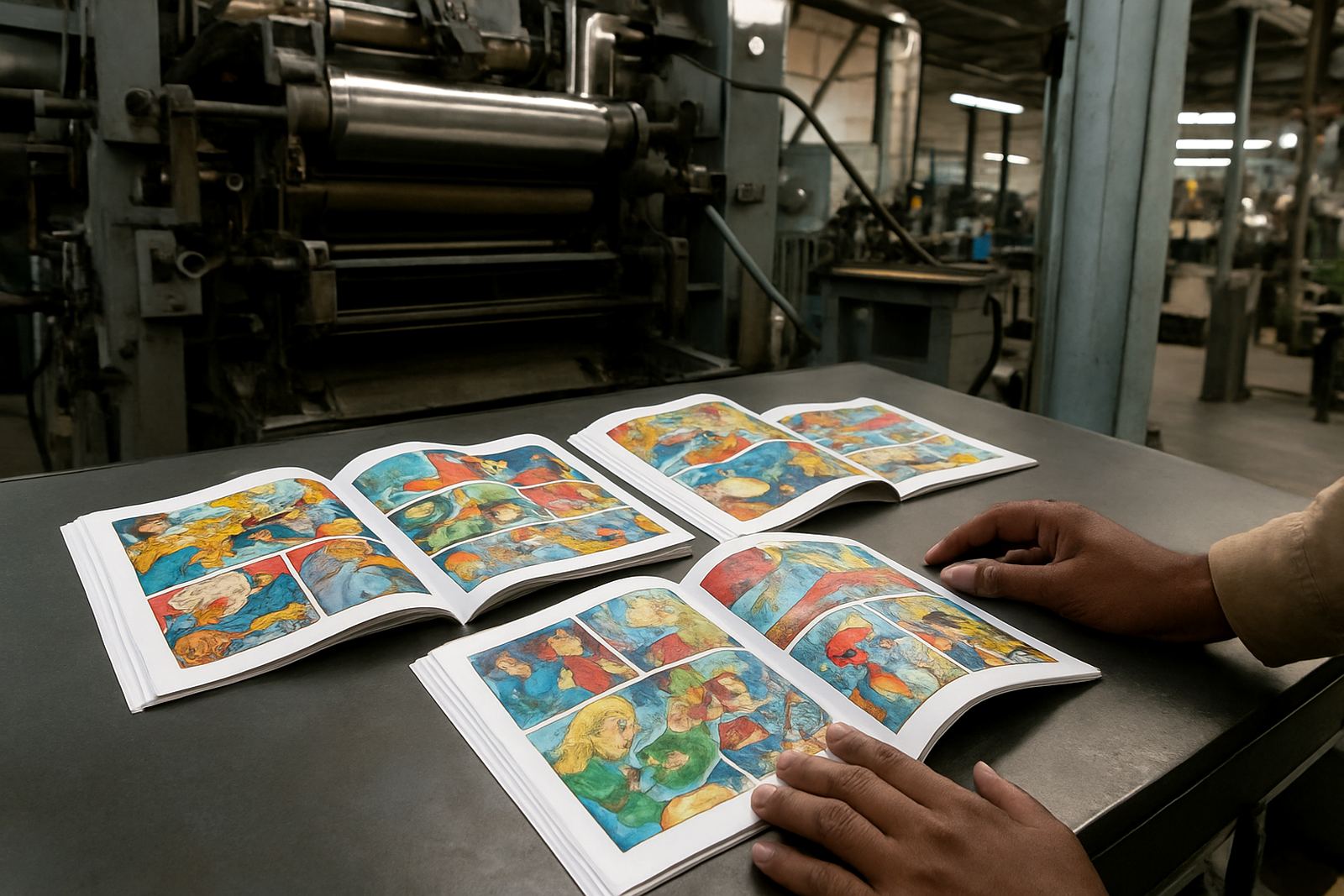
Comic books rely on clean blacks, bright solids and careful control of skin tones, backgrounds and speech bubbles. Our offset printing is suited to repeated page layouts and longer print runs, while flexo can work for selected wrap, insert or cover applications where the brief calls for a practical production method. Every job starts with prepress checks so files are checked for image resolution, font issues, page order and bleed before the first sheet goes on press.
Heavy artwork needs careful control of dot gain, trapping and ink balance so fine line work stays clear. Where a series follows an established house style, earlier printings can be matched more closely so new issues sit well beside older stock on a shelf or launch table. Consistent colour and solid blacks help each issue sit naturally with the next.
- Best suited to full colour interiors with a mix of art, captions and dialogue
- Common print formats include A5, A4, square trim sizes and custom sizes to suit your layout
- Paper choices usually range from 90gsm to 130gsm for interiors, with heavier covers where needed
- Useful for comic series, graphic novels, literacy books and branded story books
Binding Options For Pages That Need To Open Easily
A comic needs to open flat enough for the artwork while the binding still stands up to transit, retail handling and long-term use. Saddle stitching suits slimmer comics and magazines. Perfect binding gives thicker graphic novels a neat spine and a more book-like finish. Where extra strength matters, section sewing and case binding are available for premium editions, collectors copies or archive-style publications.
We also offer cover lamination, foil finishing and die cutting where the design calls for a harder wearing or more distinctive finish. A gloss laminate can help protect covers that travel through courier networks, while matt laminate can reduce glare under retail lights. If the title is aimed at children or schools, rounded production choices can help reduce scuffing and keep corners looking better after repeated handling.
- Saddle stitching for smaller comic runs and lighter page counts
- Perfect binding for thicker stories and trade paperback style books
- Section sewing and case binding for premium editions
- Cover lamination for added handling protection
Sizes, Pagination And File Planning For Comic Books
Comic books can be produced in many trims, but the most workable sizes are usually the ones that match the art style and printing budget. A standard A5 format suits many local comic titles because it is easy to post, stack and store. A4 works well for larger panels and educational comics, while square formats are often chosen for illustrated stories and collector editions. If your project includes gatefolds, special inserts or numbered pages, we can plan the structure so the pagination stays clean from cover to final page.
When ordering, it helps to confirm the final page count early because binding choice, paper weight and spine width all depend on it. Comics with heavy coverage on both sides may need a different paper choice from text-heavy titles. We also advise on whether the cover should be self cover or a heavier board cover, especially if the books will move through bookshops in Johannesburg, Pretoria, Sandton or out to publishers nationwide.
- Popular trim sizes: A5, A4, square formats and custom trims
- Page counts should be set in multiples that suit the binding method
- Bleed, safe margins and spine allowance must be checked before print approval
- Interior and cover stocks should be matched to the intended finish and handling
Where Comic Printing Works Best In South Africa
Comic printing is a good fit for publishers, self-published authors, schools, churches, marketing teams and studios producing illustrated material. We often print comics that need to move between retail, events, classrooms and courier deliveries. For Johannesburg customers in Industria, Randburg, Roodepoort, Midrand and Sandton, the production team can manage tighter turnaround times, while nationwide clients rely on planned packing and dispatch for distribution to Cape Town, Durban, Gqeberha and smaller towns.
Comics aimed at children need durable covers and clear font sizes. Graphic novels for adults may need richer paper, tighter colour control and a more refined spine finish. Branded comic booklets for product launches or training also benefit from good binding, because they are usually handled by more than one person and often kept for later reference.
- Suitable for retail sale, school use, promotional handouts and convention stock
- Works well for series titles where reprints must match earlier issues
- Good option for authors launching at events or through direct order sales
- Useful where visual storytelling needs strong colour and tidy finishing
Production Conditions, Power Needs And Practical Setup
Comic book production is handled at our Industria base in Johannesburg, where press work, finishing and dispatch are planned around local supply conditions and delivery windows. The work itself does not need special customer-side power or gas installations, but the files and specifications need to be final before production starts. If you are approving proofs remotely, it helps to have a stable internet connection and a careful sign-off process so changes do not creep in after plates or print settings have been prepared.
For publishers managing launches or distributor deadlines, we recommend allowing time for proofing, colour approval, binding and packing. Load-shedding and courier delays can affect any print schedule, so a realistic lead time is better than a rushed job that needs rework. If the comic includes spot colours, varnish, metallic effects or special cuts, the production plan should be confirmed early so the finishing stage runs smoothly.
Clients do not need to provide on-site power or gas for the print run, but they should make sure the final artwork is complete, approved and set to the correct sizes before release to print. That saves time and reduces costly corrections later.
Handling, Storage And What To Confirm Before You Order
Printed comics keep best when stored flat in a dry room away from direct sunlight and damp walls. In coastal areas, humidity can cause pages to cockle or covers to curl, so sealed cartons and sensible storage help. In Gauteng, dusty storerooms and heat can also affect the finish over time. If you are keeping stock for a launch later in the year, ask for packing that allows easy counting and safer stacking.
Before you order, check the following points carefully:
- Final trim size and page count
- Binding method and whether the book should open flat
- Paper weight for covers and interiors
- Colour setup, especially for black line art and dark backgrounds
- Proof approval process and any special finishes
- Quantity split between launch stock, warehouse stock and courier deliveries
Servicing is mainly about keeping your stock moving well and your files ready for reprint. If a title will be re-ordered, keep the approved PDF, cover spine size and finishing notes together so the next print run matches the first. That is especially useful for publishers with regular issue numbers or seasonal releases.
Printing House Support For Publishers And Authors
Printing House works with publishers, authors and businesses that need comic books printed properly, on time and packed for distribution. From prepress checks and colour proofing to saddle stitching, perfect binding, section sewing, cover lamination and packing and dispatch, the process is managed by a team that understands both artwork detail and commercial print requirements. Oupa Hlungwani leads the business, with support from Busisiwe Motaung in production, Johan van der Merwe in prepress, Siyanda Ramaboa in client services, Farieda Adams in bindery, Siphamandla Ngwenya on press and Leanne Naidoo in logistics.
If you are planning a launch, a new issue or a retail run, send your enquiry through the contact page and we will help you work through format, stock choice and finishing. Whether the job is headed to Johannesburg Central, Pretoria, the East Rand or further afield, the aim is the same: tidy books, accurate colour and a result that suits the story.
Key facts
| Printing methods | Offset printing and flexo printing |
|---|---|
| Popular sizes | A5, A4, square formats and custom trims |
| Interior paper | Usually 90gsm to 130gsm, depending on artwork and page count |
| Cover options | Heavier cover stock with matt or gloss lamination |
| Binding options | Saddle stitching, perfect binding, section sewing and case binding |
| Finishing options | Foil finishing, die cutting, lamination and packing and dispatch |