
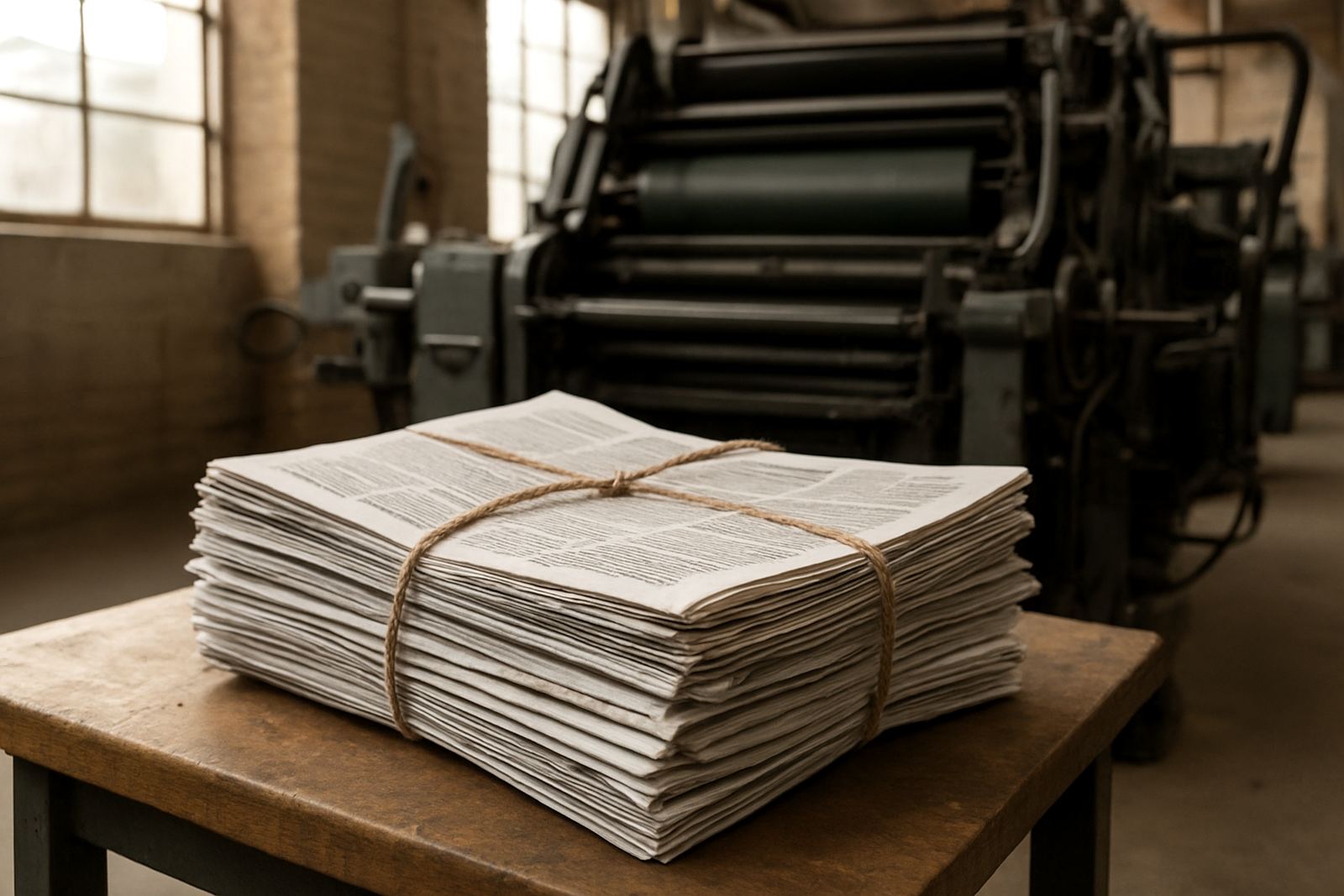
What a community newspaper is and how it is used
A community newspaper is a small newspaper-style publication for a defined area, group or audience. It usually carries local announcements, school news, church notices, classifieds, event listings and advertising aimed at one township, suburb, town or district. The familiar format makes it easy to pick up and read, even when someone starts with only one item in mind.
These publications work well for weekly notices, monthly community updates, special campaign editions and sponsored information packs. Some clients use them as folded inserts inside larger papers, while others run a stand-alone issue for distribution at shopping centres, municipal offices, clinics, churches and local businesses. For areas with load-shedding or weak internet access, printed notices still get into hands without depending on a screen.
Sizes, page counts and finishing options
Community newspapers are usually printed in compact formats that are easy to carry and cheap to distribute. Common finished sizes include tabloid, half tabloid and custom trimmed sizes, depending on the page count and the look you want. We can print single-issue runs for events, or repeat editions with the same trim and grid so the publication stays consistent month after month.
Page counts often range from 8 to 48 pages, although longer publications can be planned if the budget and content require it. Paper selection depends on the reading experience and distribution method. A lighter inside stock helps keep the publication affordable, while a slightly heavier cover or wrap can improve handling if the edition is being couriered to branches or handed out at busy points in hot weather, where pages can pick up moisture and scuffing.
- Tabloid and compact newspaper formats
- Black and white or full colour pages
- Stapled, stitched or glued finishing depending on page count
- Folded inserts for local advertising campaigns
- Short runs and longer regional print runs
Where community newspapers suit best
These publications suit publishers, community organisations, local government departments, schools, faith groups and businesses that need a printed message to travel through a defined area. They are especially useful in Johannesburg, Pretoria, Midrand, the East Rand and other places where a local edition can be distributed through shops, taxi ranks, libraries, ward offices and community events.
They also work well where content changes often. A sports result, a municipal notice or a weekend event can be laid out, proofed and printed without turning the whole publication into a long magazine project. For clients in coastal towns too, a community paper with sensible paper choice and packing can survive humidity better than loose flyers that curl or block together.
- Local news and ward notices
- Advertising inserts for retailers and service providers
- Municipal communications and public information
- School, church and NGO updates
- Campaign material for events, launches and seasonal trading
Production methods that keep pages sharp
Printing House uses offset printing for steady image quality, accurate text and repeatable colour across larger runs. Where the project calls for continuous or specialist web handling, flexo printing can suit certain insert formats and packed distribution schedules. Before the press run, prepress checks help confirm page order, image resolution, bleed, trim and colour handling so the file arrives ready for press.
For publications with photographs, adverts and editorial pages mixed together, colour proofing helps the team catch weak images, incorrect overprints or text that sits too close to trim. That matters when the newspaper carries sponsorship adverts or community campaigns with strict copy approval. A small typo in a headline can travel fast once the paper is out, so careful proofing saves time and money.
- Prepress file checking before print
- Colour proofing for adverts and images
- Offset printing for controlled quality
- Flexo options for select insert work
- Finishing and packing for local or national dispatch
Details to confirm before booking your newspaper print run
It helps to confirm the final size, page count, colour pages versus black and white, paper weight, fold style and delivery split before production starts. If your publication includes adverts from several businesses, make sure all artwork is supplied at the same resolution and that each ad has the correct live area and bleed. Community papers often run to tight deadlines, so missing files can slow the whole issue.
Also check your distribution plan. If the paper is going to Johannesburg Central, Sandton, Randburg, Roodepoort, Midrand, Pretoria or further afield, the packing format should suit how the papers will be handed out. Some clients need bundles by suburb, ward or branch, while others want one pallet per destination. A bit of planning at the start keeps dispatch tidy and cuts down on re-sorting later.
- Final trim size and page count
- Paper stock and colour plan
- Artwork quality, adverts and approvals
- Bundle sizes and dispatch addresses
- Any required inserts, wraps or special folds
Care, storage and servicing after print
A printed community newspaper does not need power or gas at the point of use, but it does need sensible storage. Keep finished bundles dry, flat and off the floor, especially in humid conditions or where deliveries sit in a warehouse for a few days. If the papers are packed too tightly in a damp room, the edges can curl and the sheets can pick up marks. That is a simple thing to avoid but it makes a difference.
For recurring editions, good servicing means consistent schedules, regular proof approvals and enough lead time for print, finishing and dispatch. If a title is issued every week or month, the same page structure and delivery plan can be reused, which keeps the workflow stable. Printing House coordinates packing and dispatch from Industria, Johannesburg, with delivery to publishers nationwide so the issue can reach its destinations on time.
Care is mostly about handling. Avoid crushing bundles in transit, keep them away from water and do not store them next to unsealed cleaning products or direct sun for long periods. If you are distributing through multiple branches, one neat count at dispatch is worth more than trying to fix short packs later on.
Key facts
| Typical format | Tabloid, half tabloid or custom trimmed size |
|---|---|
| Page count | Usually 8 to 48 pages, with larger runs by arrangement |
| Print method | Offset printing, with flexo options for select inserts |
| Colour options | Black and white, spot colour or full colour |
| Finishing | Saddle stitching, perfect binding, section sewing or folded insert format |
| Delivery | Packed and dispatched from Industria, Johannesburg to publishers nationwide |