
What a product catalogue is used for
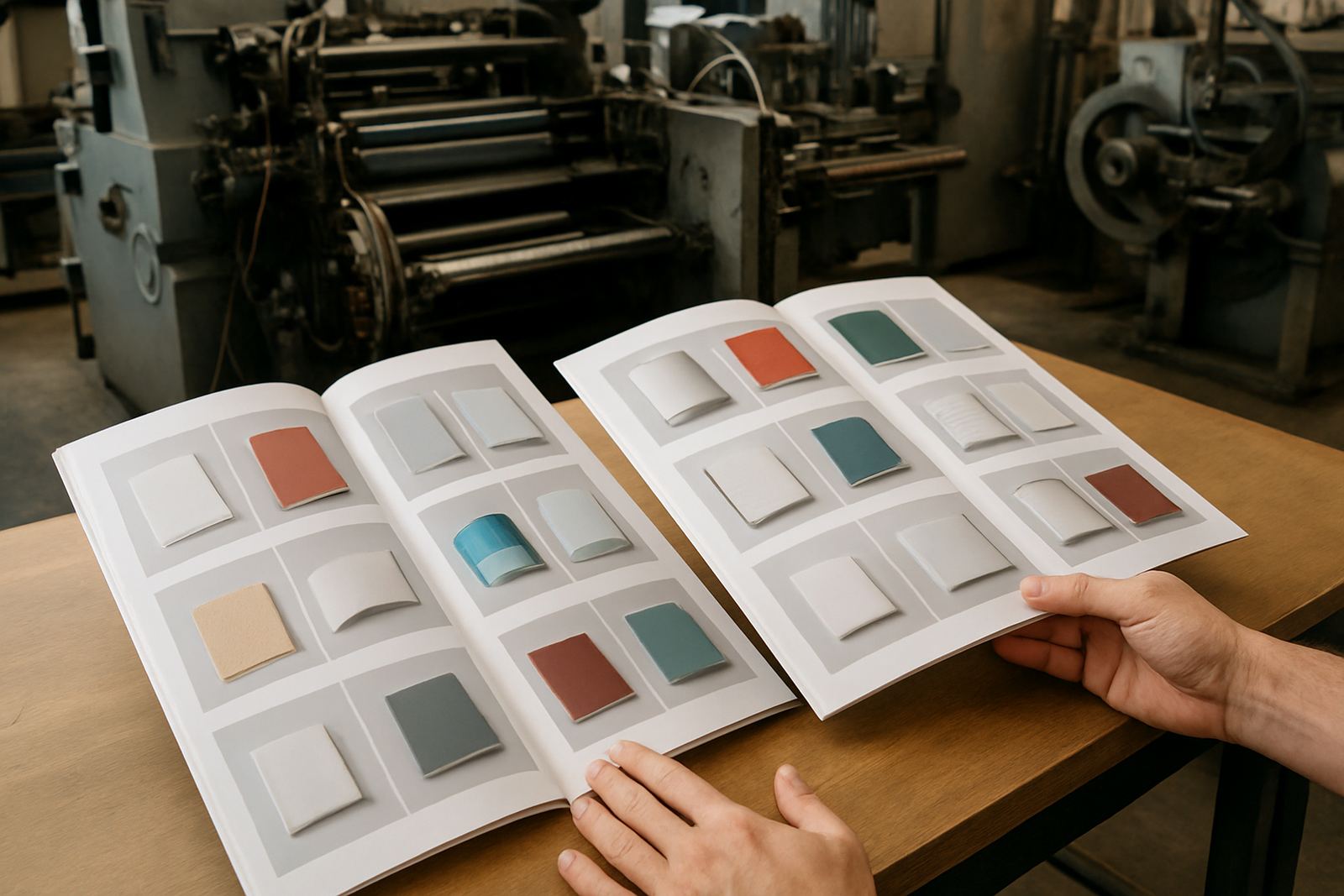
A product catalogue is a printed selling tool that brings together a range of items in one place. For retailers it can show seasonal specials, size options, colour choices and pricing. For wholesalers it helps buyers compare lines quickly and place repeat orders with less back-and-forth. At Printing House, we produce catalogues for fashion, homeware, hardware, FMCG, stationery and trade supply ranges across South Africa.
These catalogues work well when a customer needs more than a quick flyer. They suit showroom counters, sales rep visits, trade shows, mail-outs and in-store handouts. Because they are printed in useful quantities and finished properly, they stay usable for weeks or months rather than a single promotion. In wet coastal areas or busy store enviroments, a well-bound catalogue also survives handling better than loose sheets.
Sizes, page counts and binding choices
Most product catalogues are printed in A4, A5 or custom sizes that fit a bag, shelf or display rack. A4 is common for full range presentations. A5 is handy for sales teams and postable mail-outs. Square or slim formats can work well for premium ranges or seasonal launches. Page count depends on the amount of information, but catalogues often start at 8 pages and can run to 64 pages or more, depending on the binding style and paper chosen.
- Saddle stitch for slimmer catalogues, usually 8 to 48 pages
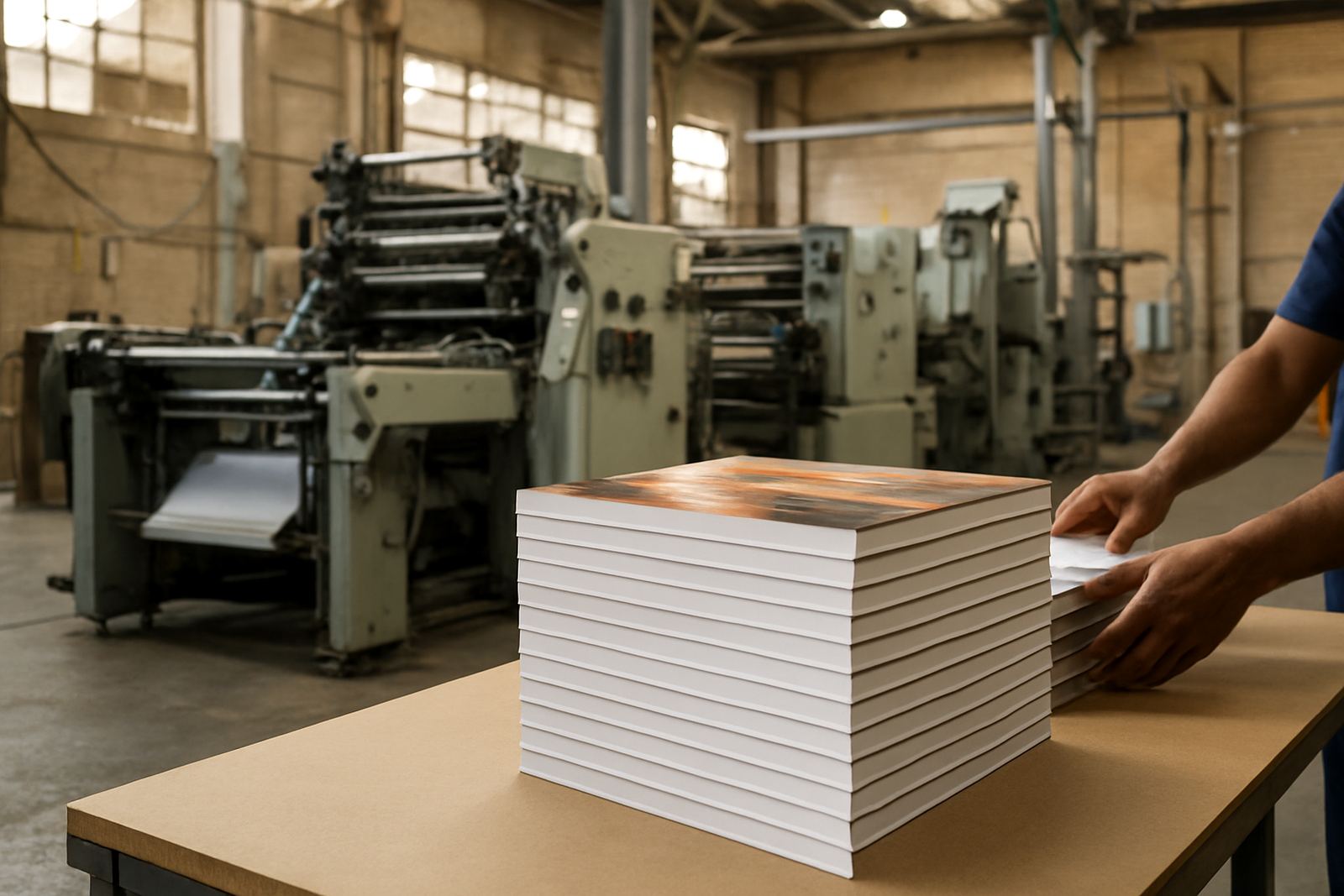
- Perfect binding for thicker catalogues with a spine and a more finished feel
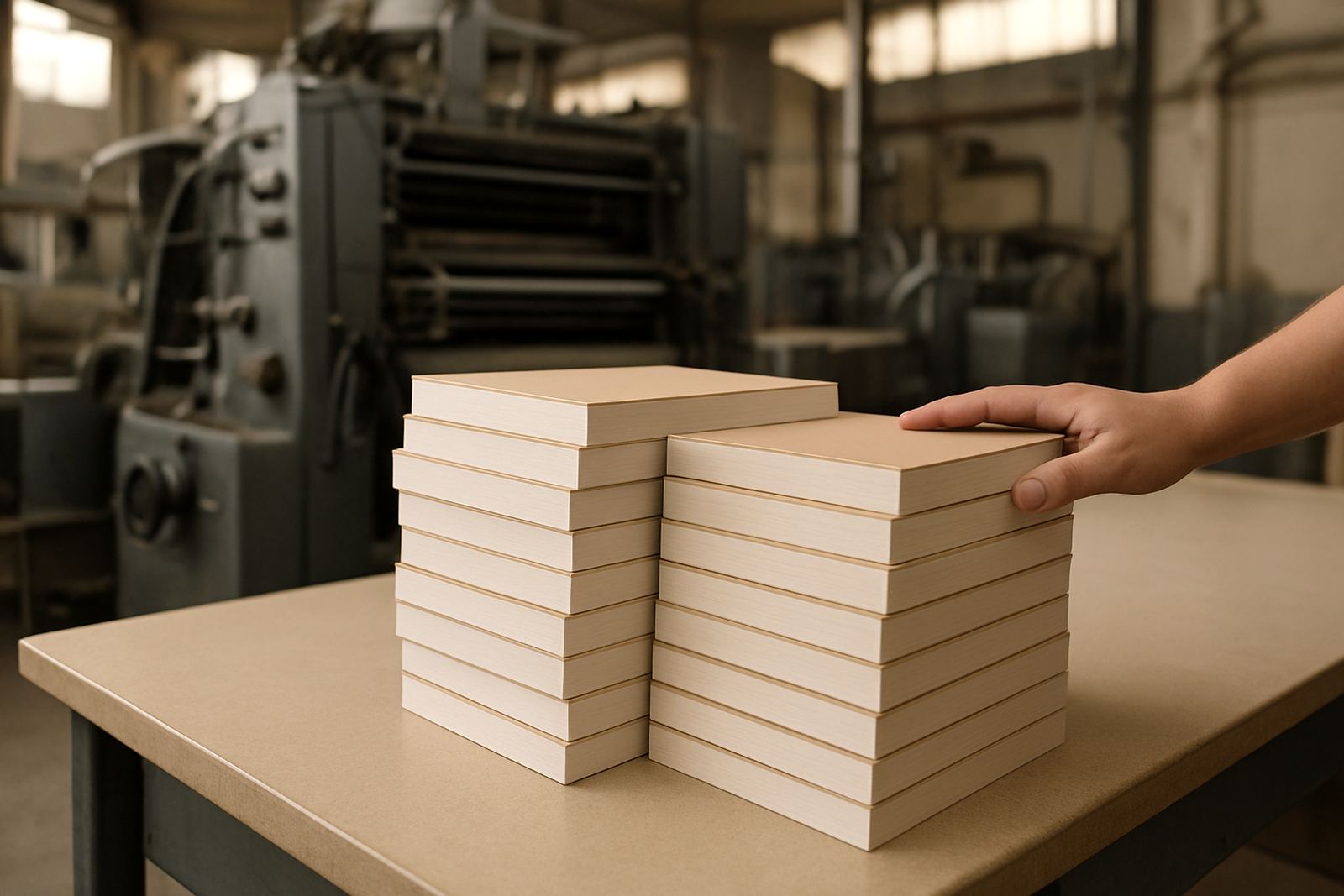
- Case binding for presentation catalogues and long-life reference books
- Section sewing where the catalogue needs extra strength for frequent use
We also advise on paper weight, cover thickness and finishing. A lighter inside text stock keeps mailing costs down, while a heavier cover adds strength. If your catalogue will sit on a sales counter or in a showroom, matt lamination can reduce scuff marks and fingerprints.
Offset and flexo printing for different catalogue runs
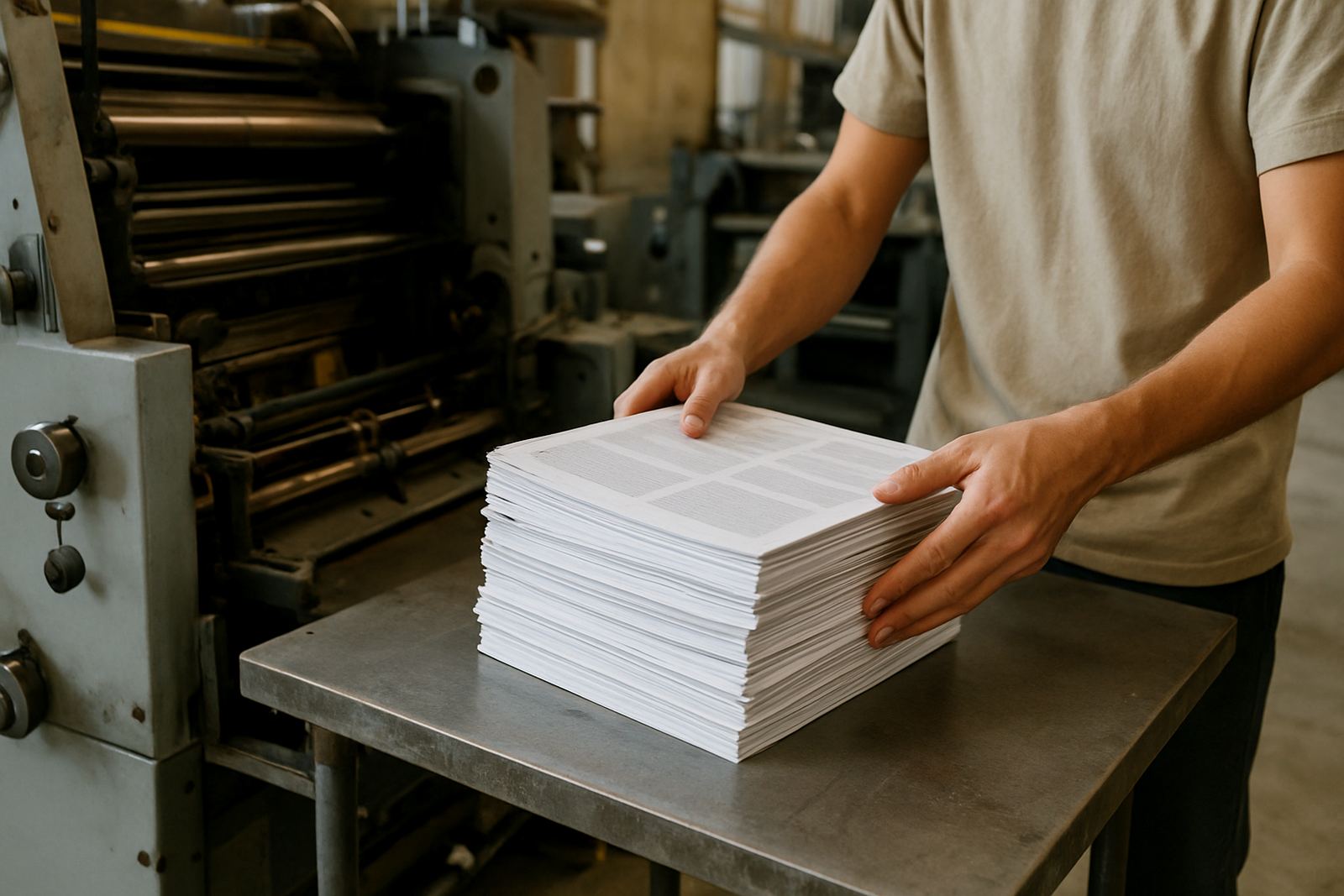
For detailed catalogues with stable artwork and repeat volume, offset printing is the usual choice. It gives sharp text, clean colour control and consistent pages across the full run. This is useful when you need the same shade on every reprint, especially for product photography, branded colour blocks and pricing tables.
Flexo printing is better suited to certain package-linked catalogues, inserts and high-volume supporting material where the setup needs to move quickly and the format is more repetitive. Our prepress checks and colour proofing help keep the final result true to your approved artwork, which matters when a catalogue includes many product codes, barcodes and small text. A missing decimal or wrong SKU can cause problems, so we check carefully before print.
- Full colour process printing for photographs and range pages
- Spot colour support where brand matching matters
- Proofing for price grids, product codes and fine detail
- Trim and bleed allowances set correctly before production
Where product catalogues suit best
Product catalogues suit any business that needs customers to compare a range in one sitting. That includes retailers planning seasonal campaigns, wholesalers supplying dealers, importers launching new stock and manufacturers presenting lines to trade buyers. They also work well for national sales teams who need a printed leave-behind after meetings in Johannesburg, Pretoria, Sandton, Midrand, Roodepoort or the East Rand.
Catalogues are especially useful where the buyer may not have time to browse online or may want a printed reference on hand in the office. In areas with load-shedding, a printed catalogue is still available when screens and connectivity are not. For trade customers, that simple point saves time and keeps orders moving.
- Retail seasonal promotions and range books
- Wholesale line sheets with codes and order details
- Sales rep leave-behinds for field visits
- Trade show handouts and buyer packs
Practical setup, power needs and handling
Printed catalogues do not need power, gas or installation. Once they arrive, they are ready to use. If they are being displayed in a store, you may want shelf holders, trays or counter stands, but the catalogue itself has no site setup requirement. That makes it a simple option for branches, pop-up sales points and seasonal launches where space is tight.
For storage, keep cartons off the floor, away from damp areas and out of direct sun. On the coast, humidity can cause pages to curl if they are left open near windows or in a hot vehicle. In Johannesburg winters, dry air can make lightweight stocks shift a bit, so good packing matters. We pack and dispatch with care to help the books arrive flat and presentable.
What to check before ordering your catalogue
Before you approve production, check the content as if you were the buyer. Product catalogues carry a lot of detail and small mistakes can be costly. We recommend confirming the range structure, item names, codes, pricing, page order and contact details before print. If prices change often, leave room for updates or print a shorter run.
- Final page count and whether the binding suits the thickness
- Paper stock for inside pages and cover strength
- Bleed, margins and image quality on every product page
- Correct prices, product codes, sizes and seasonal offers
- Any lamination, foil finishing or die cutting required
If the catalogue must last through a full selling season, ask about stronger binding and a tougher cover finish. For heavier use, case binding or section sewing can be worth the extra cost. For a shorter campaign, saddle stitch may be the better fit and more economical.
Key facts
| Typical sizes | A4, A5, square and custom formats |
|---|---|
| Page range | 8 to 64+ pages depending on binding |
| Printing methods | Offset printing and flexo printing |
| Binding options | Saddle stitching, perfect binding, case binding, section sewing |
| Finishing options | Cover lamination, foil finishing, die cutting |
| Delivery | Nationwide delivery from Industria, Johannesburg |