
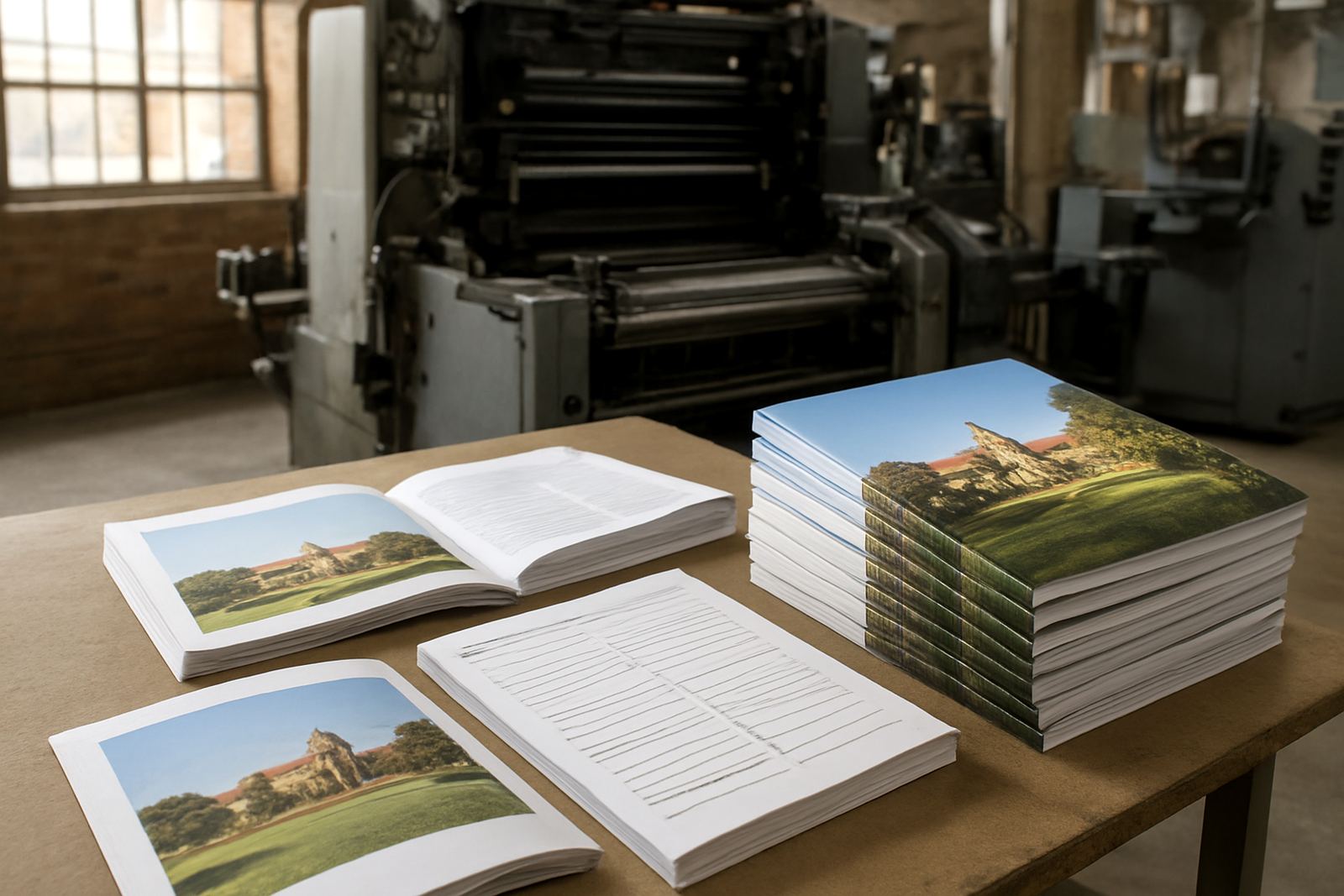
Purpose-Built Prospectuses for Admissions Teams
A college prospectus has to do more than look tidy. It needs to carry course information, fees, entry requirements, campus details and application steps in a format students can read quickly, whether they are browsing in a reception area or opening a couriered pack at home. We print prospectuses for colleges, technical training centres, skills academies and institutions that need a clean, professional publication with consistent page order and dependable colour.
For admissions season, print accuracy matters. A missing page, poor stitch, or colour shift on campus photos can leave a weak first impression. We set up each job with prepress checks, colour proofing and binding checks so the final booklet matches the approved files and holds together through repeated handling. That is especially important for prospectuses used in open days, school visits and courier packs sent to applicants across South Africa.
Our team works from Industria, Johannesburg and supplies clients in Sandton, Randburg, Midrand, Roodepoort, Pretoria, the East Rand and beyond. If your institution updates programme pages every year, or needs regional versions for different campuses, we can manage variable pages and insert schedules with care.
Sizes, Page Counts and Finishing Choices
Most college prospectuses are produced in A4, because it gives enough space for course tables, photographs and contact details without becoming bulky. Some institutions prefer A5 for lighter mailers, or a trimmed square format for special recruitment packs. We also print custom sizes where the layout or filing system requires it, provided the artwork is supplied to the correct trim and bleed allowances.
Common specification choices include matte or gloss covers, inside pages on lighter paper, and either stapled, glued or sewn binding depending on page count. For a short course guide, saddle stitching is usually practical. For a larger annual prospectus, perfect binding gives a more formal finish. Where durability is important, such as a handbook used throughout the year, case binding or section sewing can be considered.
- A4 portrait for full course catalogues and annual admissions packs
- A5 portrait for compact handouts and travel-friendly booklets
- Landscape formats for course grids and campus comparisons
- Cover lamination for extra scuff resistance and moisture protection
- Foil finishing for logos, award seals or premium cover detail
Paper selection affects both weight and cost. Heavier covers help prospectuses stand up in courier bags, while the inner pages need enough opacity so images and text do not show through. In humid coastal deliveries or if the books will sit near reception counters for months, a better cover stock and lamination can make a real difference.
Where Prospectuses Work Best
College prospectuses suit any setting where people need to compare courses, costs and deadlines quickly. They are used at reception counters, career fairs, registration days, campus tours, school outreach visits and exhibition stands. They also work well in dispatch packs sent to parents, bursary applicants and regional recruiters.
We often print prospectuses for:
- Private colleges and FET style training institutions
- Short course and skills development providers
- Hospitality, business, IT and technical training campuses
- Education groups with multiple branches or intake dates
- Publishers and agencies producing annual recruitment guides
For Johannesburg-based institutions, local print turnaround helps when course lists change after internal approvals or when intake numbers shift close to registration. We also understand that some campuses need small batch top-ups rather than one large annual run, especially where programmes vary by region. That makes it easier to keep inventory under control and avoid holding outdated copies.
Printing Setup, Artwork and Production Requirements
To keep a prospectus job moving, the file setup needs to be correct from the start. Pages should be supplied in reading order, with proper bleed, crop marks if required, and all fonts embedded. Images should be high resolution and colour should be checked on a calibrated proof before sign-off. If a document includes maps, timetables or course codes, those details must be final before the print run begins because reprints after approval can add unnecessary cost.
We use offset printing for larger education runs where consistency across hundreds or thousands of copies matters. For shorter, highly variable or more targeted jobs, flexo can be suitable for certain packaging and insert work related to the prospectus pack. Our prepress team reviews page count, imposition and binding method so the publication folds and trims correctly.
Printing itself does not need site installation, power or gas at your premises. What does matter is the receiving side of the job. Prospectuses should be stored flat, away from damp walls, direct sunlight and floor moisture. In buildings affected by load-shedding, keep the storage area dry and avoid placing cartons near generators or dusty back-up equipment. If the books are going to multiple campuses, confirm who is receiving stock, where it will be stored and whether municipal access rules or security controls affect delivery times.
Finishing That Makes the Cover Work Harder
Finishing is often what gives a prospectus a proper institutional feel. A lamination finish can help against fingerprints and handling marks, especially on dark covers. Foil finishing is useful for crest details, achievement badges or a year marker. Die cutting can create a neat window, shape or tabbed opener if you want the publication to stand apart from a standard brochure.
Binding choice should match the intended use. Saddle stitching is quick and economical for slimmer booklets. Perfect binding gives a square spine and a more formal shelf presence. Section sewing is a better choice where the prospectus must open more easily and cope with repeated use through a full admissions cycle. For premium packs or archive copies, case binding offers a sturdy hard cover finish.
- Cover lamination for handling and moisture resistance
- Foil finishing for logos, titles and year dates
- Die cutting for custom shapes, tabs or reveal panels
- Section sewing for better page layflat and strength
- Packing and dispatch for bulk distribution to multiple campuses
What to Check Before You Order
Before you place a prospectus order, it helps to confirm a few practical details. First, check the final page count because binding choice depends on it. Second, confirm whether the institution wants single language or bilingual text, as that affects pagination and layout. Third, verify the intake year, fees and contact names so old information does not end up in a fresh run.
You should also decide whether the prospectus will be handed out loose, wrapped in packs, or sent as part of a mailer set with forms and inserts. If you need inserts or personalised slips, tell us early so we can plan the sequence and packing. If your institution has multiple campuses, list the versioning clearly. A small typo in a campus name or course code can cause extra admin later, and that is avoidable with one careful proof round.
For larger orders, ask about carton counts, dispatch dates and whether you need staggered delivery to different branches in Johannesburg Central, Sandton, Pretoria or further afield. We can pack to suit office storage space, which helps when a training centre has limited room and regular intake changes.
Service Support from Prepress to Dispatch
Printing House operates from Industria, Johannesburg, with a team that understands how educational print deadlines behave around intake dates and board approvals. Oupa Hlungwani oversees the business, while Busisiwe Motaung, Johan van der Merwe, Siyanda Ramaboa, Farieda Adams, Siphamandla Ngwenya and Leanne Naidoo manage production, prepress, client service, bindery and logistics across the job flow.
That matters because a prospectus is rarely just a booklet. It is part of admissions planning, courier timing and stock control. Our production, finishing and dispatch process is set up to keep the order moving without extra back-and-forth. If your institution needs a repeat print every year, we can keep the specification consistent so the next run matches the previous one in trim, colour and binding. Clients reach us through the enquiry form on our contact page, and we respond with the details needed to quote and schedule the job properly.
Key facts
| Typical sizes | A4, A5 and custom trimmed formats |
|---|---|
| Printing methods | Offset printing for standard runs, flexo where suitable for related pack components |
| Paper options | Matte, silk or gloss inside pages with heavier cover stocks |
| Binding options | Saddle stitching, perfect binding, case binding and section sewing |
| Finishing options | Cover lamination, foil finishing, die cutting, packing and dispatch |
| Delivery area | Nationwide delivery from Industria, Johannesburg to colleges and training institutions across South Africa |