

Why colleges need print that works term after term
College print is not only about looking neat on registration day. Prospectuses, learner manuals, course packs and annual reports have to survive handouts, filing, courier runs and repeated use in classrooms. That means the paper, binding and finishing need to suit the actual job, not just the artwork.
At Printing House, we work with colleges, training centres and academic departments that need dependable print quantities, clear colour control and a finish that holds together through a full academic cycle. In Johannesburg and other inland centres, we also plan for storage conditions, dust and handling during busy intake periods. On the coast, we advise on paper movement and cover choices that cope better with humidity.
Typical college print projects we handle
Most institutions come to us with a mix of short-run urgent material and larger scheduled print jobs. A prospectus may need one version for domestic students and another for international admissions. Manuals often need a clean text layout, strong section breaks and page numbers that are easy to follow during class. When several departments share one publication, prepress checks matter because one missed page or wrong course code can cause delays across the whole print run.
- Prospectuses for admissions and open days
- Student handbooks and policy guides
- Lecturer manuals and course packs
- Annual reports and governance documents
- Programme brochures for campus marketing
For many colleges, the most practical setup is offset printing for larger volumes and flexo printing for selected packaging or distributed materials where it suits the format. We check every file before press so the final output matches the approved version, not a rushed last edit. That saves time and avoids the costly reprint that can happen when a course code, campus name or intake date is wrong.
Print and binding choices that suit academic use
The right finish depends on how often the publication will be used and how many pages it has. A 24 page programme brochure may be fine with saddle stitching, while a 120 page manual usually needs perfect binding. For thicker reference material, section sewing or case binding gives better long-term durability. We also offer cover lamination, foil finishing and die cutting when a college wants a more formal presentation for executive documents or graduation material.
Common equipment and production stages for college work include:
- Offset presses for stable colour and higher volumes
- Flexo printing for selected repeat items and packaging applications
- Prepress checks for fonts, bleeds, image resolution and page order
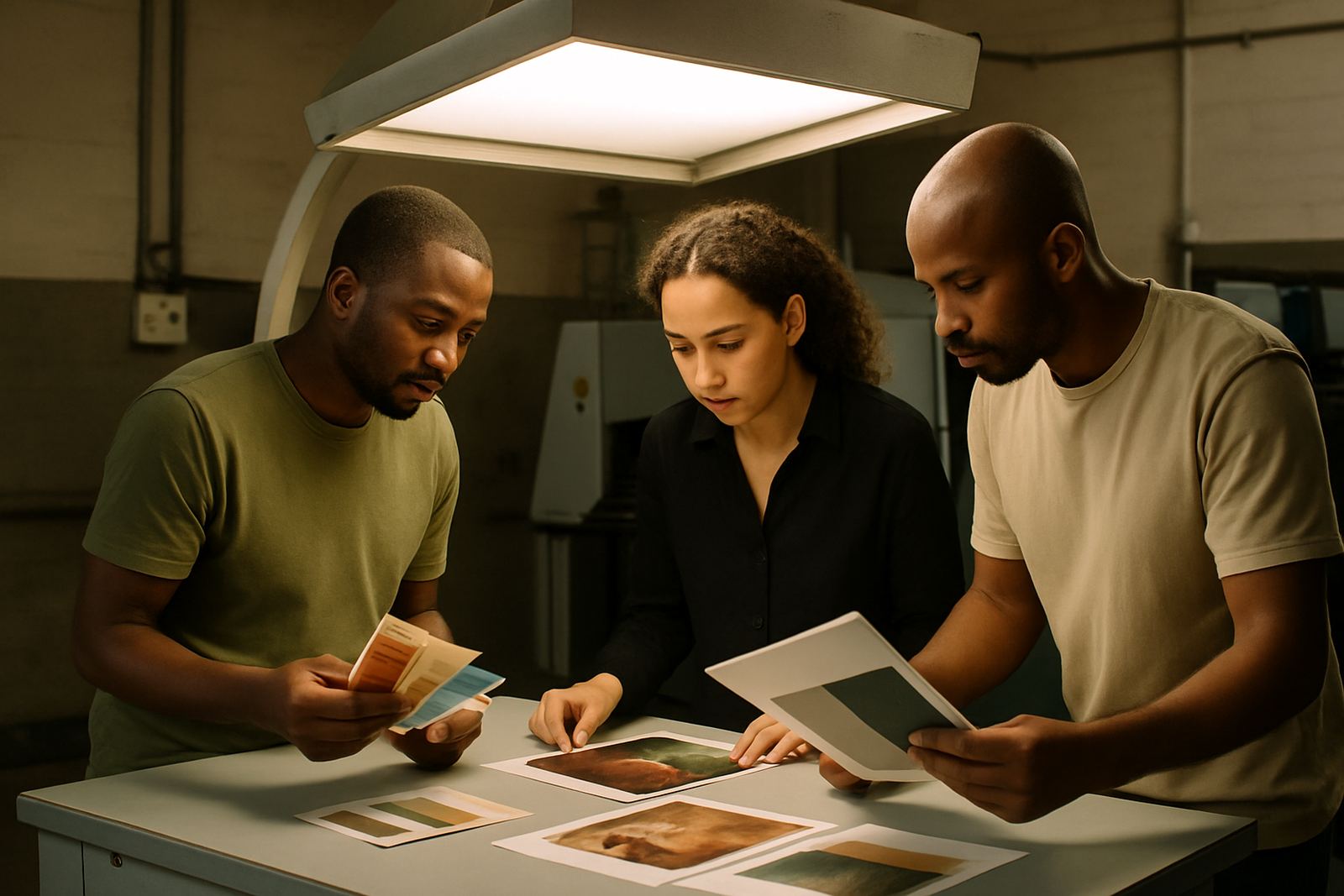
- Colour proofing before full production
- Saddle stitching, perfect binding, case binding and section sewing
- Cover lamination, foil finishing, die cutting, packing and dispatch
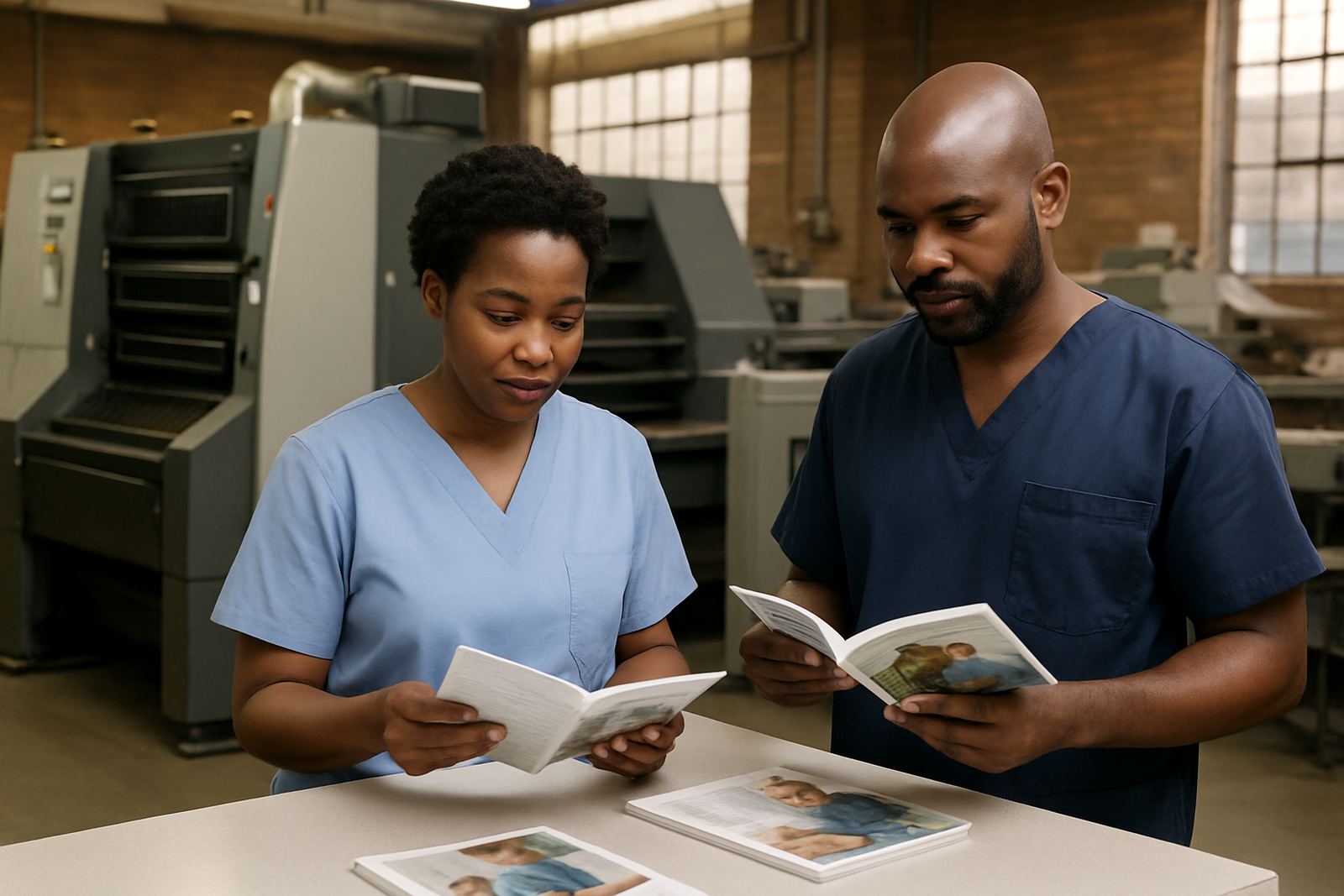
For manuals that will be used daily, we usually recommend a heavier cover and a binding method that opens well on a lectern or classroom table. If pages must lie flatter for note taking, section sewing can be worth the extra spend.
Artwork planning and layout guidance before files go to print
College publications work best when planning starts early, especially if the document carries multiple departments, term dates or approval layers. A clean page structure helps students find what they need quickly and also keeps costs under control. When a prospectus is updated late, the usual problem is not the printing itself but the last minute content reshuffle that affects pagination, contents pages and cross references.
Keep the layout practical. Use a legible body font, consistent heading styles and enough space for tables, timetables and entry requirements. Leave room for campus addresses, course codes and contact details that may change before print approval. If the publication will be used in town offices, rural outreach visits or open day packs, it should still read clearly in low light and under quick handling. It sounds obvious, but a too-tight layout can make a brochure feel cheap even when the paper quality is good.
We advise colleges to sign off a final proof before the run starts, especially when the print order is split across campuses or used for multiple orientations. That small step avoids extra waste and keeps the schedule on track, particularlly when intake dates are fixed by the academic calendar.
Common mistakes that drive up college print costs
The biggest cost problems usually come from rushed approvals, changing page counts and unclear finishing instructions. Colleges sometimes send files with mixed image quality, missing pages or different versions from different departments. That creates delays at prepress and can push the job into a more expensive reprint cycle. Another common issue is choosing a binding style before the page count is final, then discovering the spine width is wrong.
- Sending the final file before checking names, dates and course codes
- Using low-resolution photos for admissions or campus marketing
- Changing the page count after quoting and layout approval
- Choosing a cover that is too light for repeated use
- Forgetting extra copies for libraries, lecturers and regional offices
It also helps to plan for actual distribution. If books are going to Pretoria, East Rand or out to campuses further afield, packing and dispatch need to match the delivery method. Loose cartons without clear labelling can slow down internal distribution and cause missing quantities at the wrong branch.
Budget ranges in Rand for college publications
Budget depends on page count, paper choice, binding, print quantity and any special finishing. For smaller training manuals or event booklets, a practical starting point is often R3 500 to R12 000 depending on size and quantity. Mid-size prospectuses and academic guides can range from about R12 000 to R45 000. Larger institutional publications, especially those with colour throughout, heavier covers or sewn binding, can sit from R45 000 to R120 000 or more.
As a guide, saddle stitched booklets are usually the most economical for shorter publications. Perfect binding adds a more formal finish and works well for medium page counts. Case binding and section sewing sit at the higher end because they take more production time and materials, but they suit documents that must last longer in libraries or administrative offices. If your college needs phased delivery, we can also split production so one batch is ready for an intake date while the rest follows later.
Working with Printing House in Johannesburg
Printing House is based in Industria, Johannesburg and we support publishers, colleges and training institutions across South Africa. Our team includes Busisiwe Motaung in production, Johan van der Merwe in prepress, Siyanda Ramaboa in client services, Farieda Adams in bindery, Siphamandla Ngwenya on press and Leanne Naidoo handling logistics. Oupa Hlungwani leads the business, with a focus on print that arrives as agreed and is ready to use.
Clients reach us through the enquiry form on our contact page, and that works well when you need to send specs, page counts or delivery details for more than one campus. We regularly deliver into Johannesburg Central, Sandton, Randburg, Roodepoort, Midrand, Pretoria and the East Rand, as well as to institutions nationwide. If your college needs print that is neat, on time and built for real academic use, we can help from prepress right through to packing.