
Sewn Sections For Books That Need Extra Life
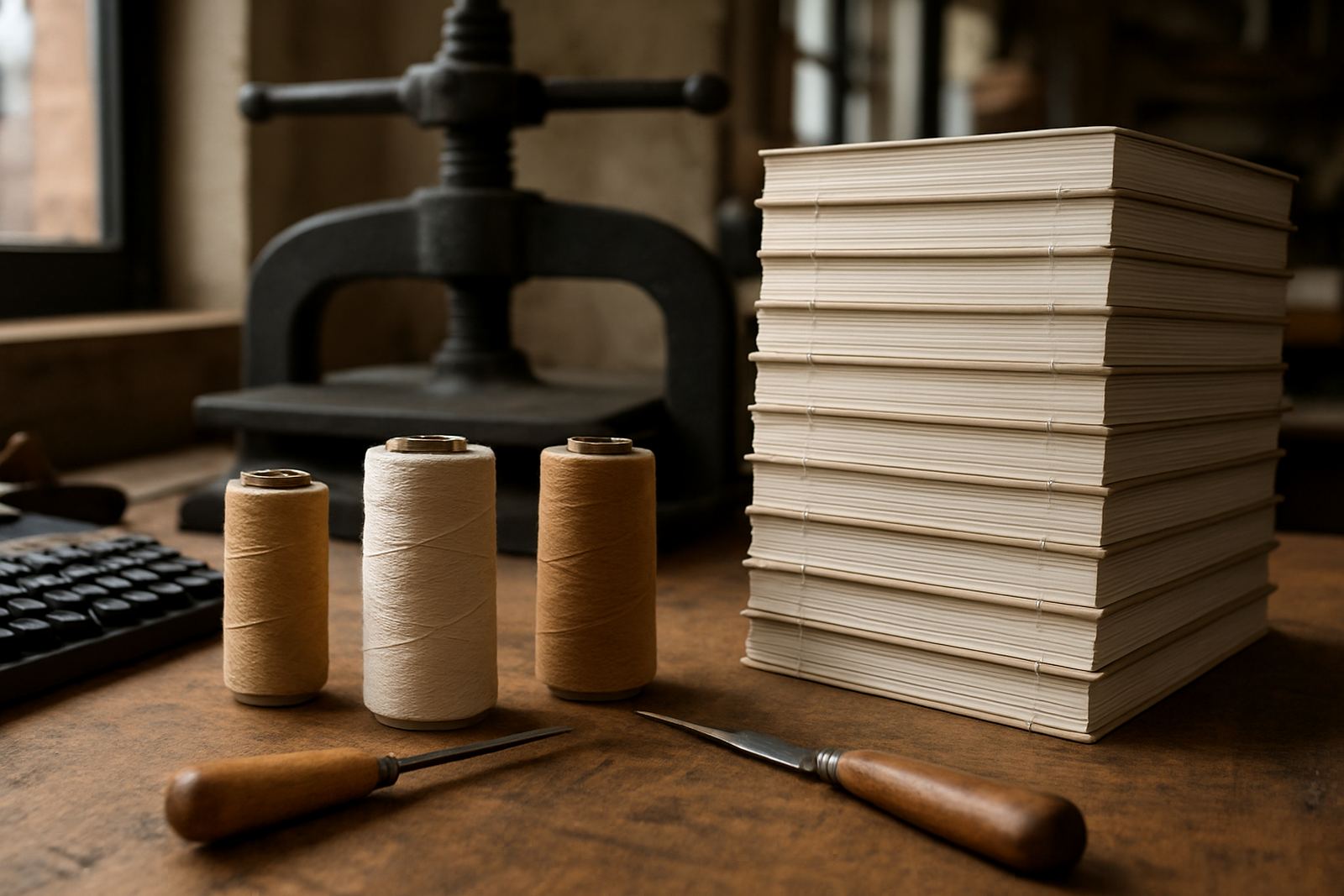
Section sewing is the right choice when a publication must open well, hold up under repeated handling, and stay intact through months or years of use. We prepare folded sections, stitch them with durable thread, then hand them over for the next binding stage or complete them as part of a full book production run. This method is common for hard cover books, premium paperbacks, annual reports, training manuals, and reference books that need more strength than a basic adhesive-only bind.
At our Industria facility, we work with publishers and businesses that need measured, reliable production on short and long runs. Section sewing gives the spine better flexibility and helps reduce cracking on heavier books. It also gives the finished publication a more refined opening feel, which is important for academic titles, coffee table books, and content that must be read for long periods. When a book will be shipped around South Africa or handled in library and office settings, this extra support makes a clear difference.
- Suitable for hard cover and premium paperback books
- Better durability for high-use publications
- Improved opening action with less strain on the spine
- Works well for stitched signatures of 8, 12, 16 or 32 pages depending on the job
What The Section Sewing Process Includes
We manage the sewn section process carefully from prepress checks through to final packing. Before stitching begins, we confirm pagination, fold quality, grain direction, section count, and whether the sections will suit the intended binding method. If there is a problem with page creep, trim allowance, or imposition, it is easier and cheaper to catch it before the sections are sewn.
Our process is practical and straightforward. After folding, the sections are grouped in sequence, sewn with the correct thread tension, then inspected for alignment and consistency. The sewn book block is then sent for further binding steps such as casing in, perfect binding, or finishing as specified. Where required, we can also coordinate cover lamination, foil finishing, die cutting, and packing for dispatch. It is a tidy workflow that keeps everything moving without confusion.
- Prepress check of imposition and section order
- Folding and collating of signatures
- Sewing with controlled tension and stitch placement
- Inspection of spine integrity and section alignment
Technical Specs We Work To
Different books call for different sewing specifications, and we match the method to the project. Heavier paper stocks, coated paper, and larger trim sizes all need careful handling so the sections sit square and the spine remains even. We also factor in spine swell, final trim allowance, and the binding style chosen for the book.
Common production considerations include book size, paper weight, number of sections, thread choice, and the expected opening behaviour. For many projects, sewn sections are ideal where the finished book must lie flatter than a glued-only book, or where the publication will be stored in hot inland conditions or coastal humidity. South African print jobs often move between Johannesburg, Pretoria, Durban, Cape Town, and smaller regional towns, so binding strength matters more than people sometimes expect.
- Common trim sizes: A5, B5, 210 mm square, and custom formats
- Typical paper weights: 70 gsm to 150 gsm depending on content
- Section sizes: usually 8, 12, 16, 24 or 32 page signatures
- Threaded sewing for improved spine strength and opening feel
- Suitable for books bound as case bound, section sewn paperback, or combined with other finishing methods
- Final trim and square back accuracy checked before dispatch
Turnaround, Planning And Dispatch
Turnaround depends on page count, signature count, stock availability, finishing requirements, and whether the job is part of a larger print run. Simple sewn section work can move quickly once the files and print sheets are approved, while larger publishing projects need more time for folding, sewing, drying, trimming, and final quality checks. We plan production to suit the full job, not just the sewing stage.
For publishers working to a launch date or a school term, we recommend allowing enough lead time for prepress checks and sample approval. If your title is going nationwide, we can schedule packing and dispatch so deliveries move in batches to Johannesburg Central, Sandton, Randburg, Roodepoort, Midrand, Pretoria, the East Rand, and further afield. That helps reduce last minute pressure, especially when courier cut-off times or municipal access rules affect loading and collection.
- Short runs may be completed faster once files are signed off
- Larger publishing runs need staged production and quality checks
- Dispatch can be arranged for multiple delivery points
- Timeframes are confirmed after we assess the full specification
Pricing Based On The Build, Not Guesswork
Section sewing is priced according to the actual build of the job. We look at the page count, signature structure, trim size, paper stock, thread requirements, and whether the sewing is part of a full binding package or a standalone production step. That gives a fairer result than a flat rate that ignores the real work involved.
For authors and publishers, this means you only pay for what your book needs. A short run of premium books with a tight spine spec will be priced differently from a large educational title with multiple sections and a heavier cover. If the job includes prepress checks, colour proofing, laminamtion or other finishing steps, we will quote those separately or as part of one production plan so the budget stays clear from the start.
Where possible, we suggest the most cost-effective route that still protects the finished book. That might mean adjusting section counts, reviewing paper choice, or combining sewing with another binding method. The goal is to avoid waste, reduce rework, and keep the publication on budget without cutting corners.
Maintenance And Reorder Planning For Repeat Titles
Repeat book and magazine work benefits from a steady production record. Once we have a spec on file, reorders are easier to plan because the section count, fold pattern, and finishing sequence are already known. This reduces setup time and helps keep each reprint consistent with the previous one.
For publishers with ongoing titles, we recommend reviewing the sewn section spec at intervals if there is a change in paper stock, page count, or cover finish. Even a small change can affect spine swell, trim accuracy, or opening feel. If your title is sold in humid coastal areas or stored in warehouses without climate control, it is also worth checking whether the book still performs as expected after a few production cycles. Small changes now can save a lot of trouble later, and it keeps the final book looking tidy.
- Keep a record of section count and paper weights for reprints
- Review binding performance when content or stock changes
- Check spine behaviour after storage in hot or humid conditions
- Ask for updated production notes when launching revised editions
From Industria To Publishers Across South Africa
Printing House is based in Industria, Johannesburg, and we work with publishers, authors, schools, corporates, and trade customers across South Africa. Our team includes production, prepress, bindery, client service, logistics, and press support staff who work together to keep jobs moving. That practical setup matters when a book has to be produced cleanly and delivered on time.
Oupa Hlungwani leads the business, with Busisiwe Motaung managing production, Johan van der Merwe handling prepress supervision, Siyanda Ramaboa leading client services, Farieda Adams coordinating bindery, Siphamandla Ngwenya on press operations, and Leanne Naidoo planning logistics. If you need sewn sections for a book project, use the enquiry form on our contact page and tell us the size, page count, quantity, and target date. We will take it from there.
Key facts
| Method | Section sewing with thread into folded signatures |
|---|---|
| Typical use | Books needing stronger spine support and better opening feel |
| Common signature sizes | 8, 12, 16, 24 or 32 pages |
| Paper range | 70 gsm to 150 gsm depending on title and finish |
| Formats | A5, B5, square formats and custom trims |
| Coverage | Industria, Johannesburg and nationwide delivery |