
Why grain direction changes the way paper behaves
Every sheet of paper has a direction in which the fibres run more evenly. That is the grain. When pages are folded or bound with the grain running the right way, the sheet moves with the fold instead of against it. The result is a cleaner spine, less cracking on coated stock and a smoother feel in the hand.
For books and magazines, grain direction matters most where there is a fold, a spine or repeated opening. If the grain runs across the fold, the paper resists the bend. You may see cracking on a cover, wrinkling near the spine or pages that spring back instead of lying properly. On thicker stocks, the difference is even more obvious.
In practical terms, the grain should usually run parallel to the spine on a perfect bound book, and parallel to the fold on a saddle stitched magazine or brochure. That simple choice helps the publication open better and makes the finished item feel more considered.
How to tell the grain before production starts
Good prepress planning starts with checking grain direction before plates are made or sheets are sent to press. If your printer knows the final trim size, page count and binding method, they can confirm the best grain direction early and avoid wasted stock. This is especially useful when a title mixes text pages, cover work and inserts.
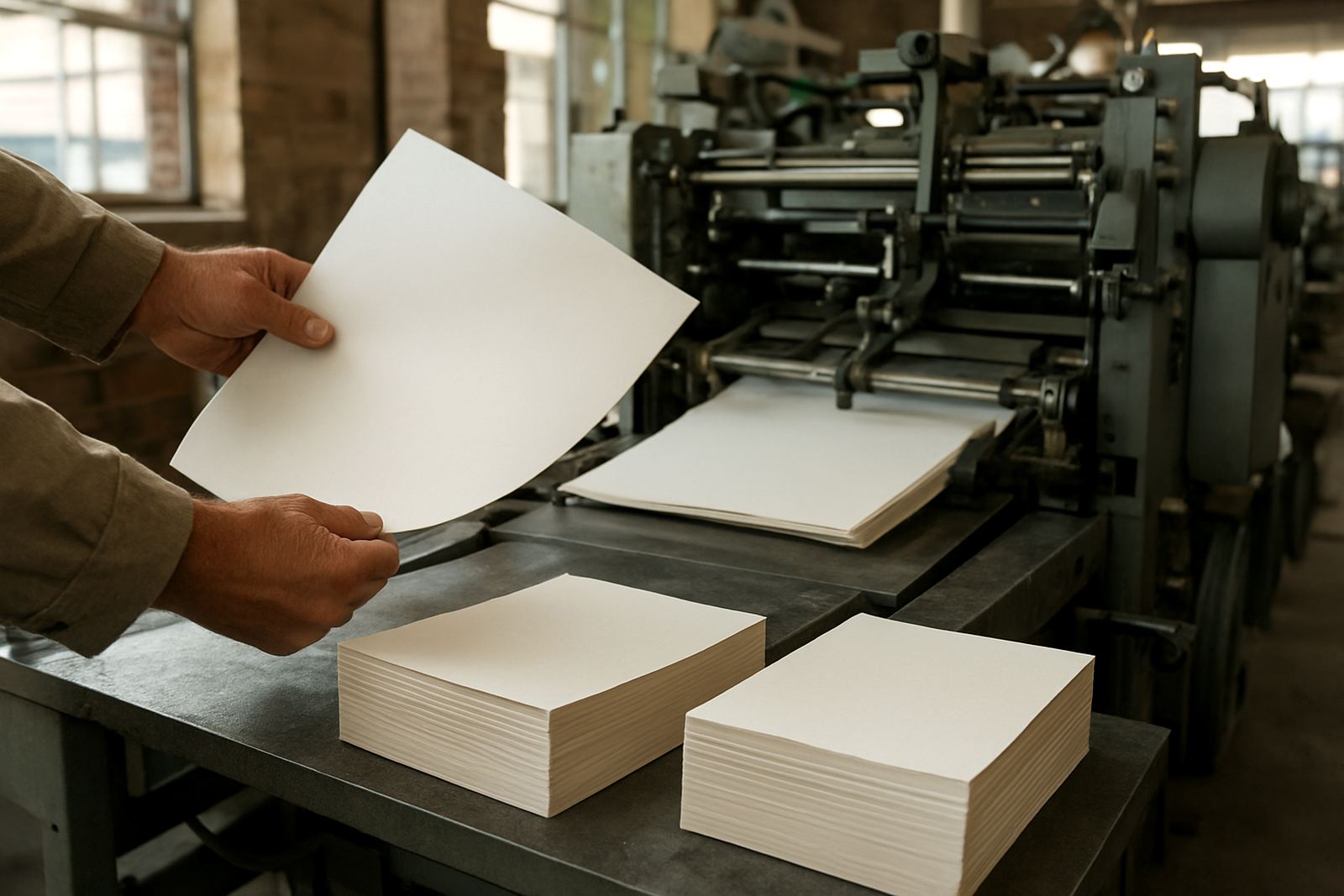
You do not need special equipment to notice grain in many papers. A quick manual check can show it clearly.
- Lightly bend the sheet in both directions and compare which way offers less resistance.
- Moisten a small corner with a damp finger and watch which way the paper curls more easily.
- Check the grain on coated covers before lamination, because cracks can show after folding.
- Confirm the grain direction on all supplied stock if reprints need to match an earlier run.
If a job is being produced for clients in Johannesburg, Durban or Cape Town, the stock may travel a fair distance before printing. That makes early checking important, because replacement paper can take time and any delay can affect delivery schedules.
The right grain for folding, stitching and binding
Different finishing methods ask for different handling of the sheet. Saddle stitching works best when the grain runs parallel to the spine so the magazine folds cleanly and the centre spread sits neatly. Perfect binding needs careful grain planning too, because the spine is glued and the book has to open without fighting itself. Case binding is even more sensitive on heavier books, where the boards, endpapers and cover material all need to move together.
Here is a simple guide that helps most print buyers:
- Saddle stitched magazines: grain parallel to the spine for a cleaner fold.
- Perfect bound books: grain parallel to the spine to reduce stress on the adhesive line.
- Case bound books: grain matched through the text block and cover where possible.
- Folded inserts and sections: grain should follow the fold so pages do not crack or split.
When grain is ignored, the symptoms show up quickly. A cover may crack at the hinge, the book may not lie open well, and pages can sit slightly proud of each other. Those details are easy to spot in the finished book.
What happens when grain direction is wrong
Wrong grain direction can create problems that are expensive to fix once the run is complete. Folding becomes less accurate, trimming can look uneven and binding becomes harder to control. On a magazine with a heavy cover, the wrong grain can make the front and back covers spring away from the text block. On a thicker book, the spine may bow or the first few pages may pull away too soon.
There is also a finished feel issue. A publication that opens nicely feels easier to use and more professional. One that resists the hand can feel stiff, even if the print quality is good. In a market where publishers, corporates and authors all want value for money, that tactile difference matters.
In humid coastal conditions, paper can move a bit more than people expect, especially if it is stored in a hot room or loaded off the truck too quickly. That is why stock should be acclimatised where possible before it goes into production. A little planning helps avoid curling and keeps the job steadier through press and finishing.
A Johannesburg example from a real print run
Consider a 96 page magazine being printed for distribution to retailers, libraries and subscribers nationwide. The trim size is set for easy shelf handling and the cover is a heavier coated stock. If the grain is placed correctly, the saddle stitch sits square, the centre spread opens properly and the cover folds without visible cracking.
If the same job is rushed with grain in the wrong direction, the press sheet may still print well but the finishing room will feel the pressure. The fold may need extra attention, the spine can look stressed and the final stack might not sit as evenly when packed for dispatch. In Industria, where many jobs move from prepress to press and then through bindery in the same facility, those small checks save time and reduce rework.
For publishers delivering to Sandton, Midrand or Pretoria, this matters because the publication often has to arrive looking sharp straight out of the wrap. There is no room for a magazine that opens badly on the first page or a book cover that already shows wear at the hinge.
Planning grain direction with your printer from the start
The best time to discuss grain direction is before artwork is finalised. Once the page count, binding style and paper choice are known, the printer can advise on sheet size, imposition and the direction that suits the job best. This is where prepress checks, colour proofing and binding planning should work together.
A good print brief should include the following details:
- Final trim size and page count
- Whether the job is saddle stitched, perfect bound or case bound
- Paper type and gsm for text and cover
- Any fold-outs, inserts or sections sewn into the book
- Expected delivery areas and timing for dispatch
When these points are clear, production is smoother and the finished publication feels better in the hand. That is the practical value of grain direction: fewer surprises, cleaner folds and a print job that behaves properly from first page to final trim.