
A school crest that needed more than foil
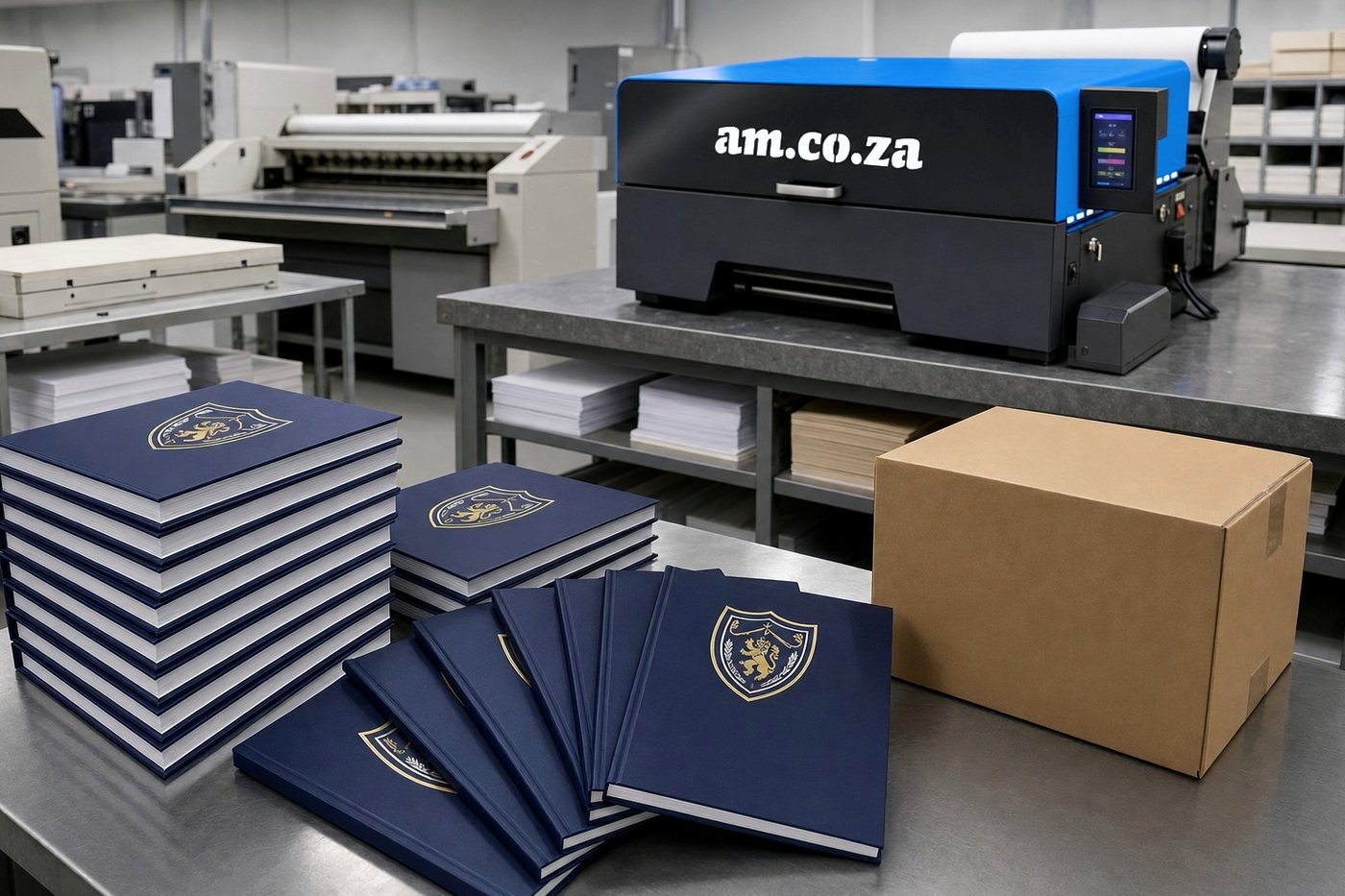
Hardcover yearbooks are a large part of our school work. A typical order is a navy leatherette case with the school name on the spine and the crest on the front board, and families keep these books long after the last school term. Schools increasingly wanted that crest to look like the real badge: every colour of the shield, the motto ribbon and the laurel, with a surface that stands out from the cloth when you touch it.
Our usual finishes could not deliver all of that at once. Foil blocking gives a single metallic colour, and a blind deboss adds texture but no colour at all. Our guide to book cover finishes explains where each of those still works well. For a multicolour crest with depth, we needed a different method.
“Schools would bring the blazer badge to a meeting and ask if the yearbook could match it. Foil got us part of the way, but a red and white shield in one gold colour never felt like their crest.”
Busisiwe Motaung, Production Manager
How a UV-DTF crest is made
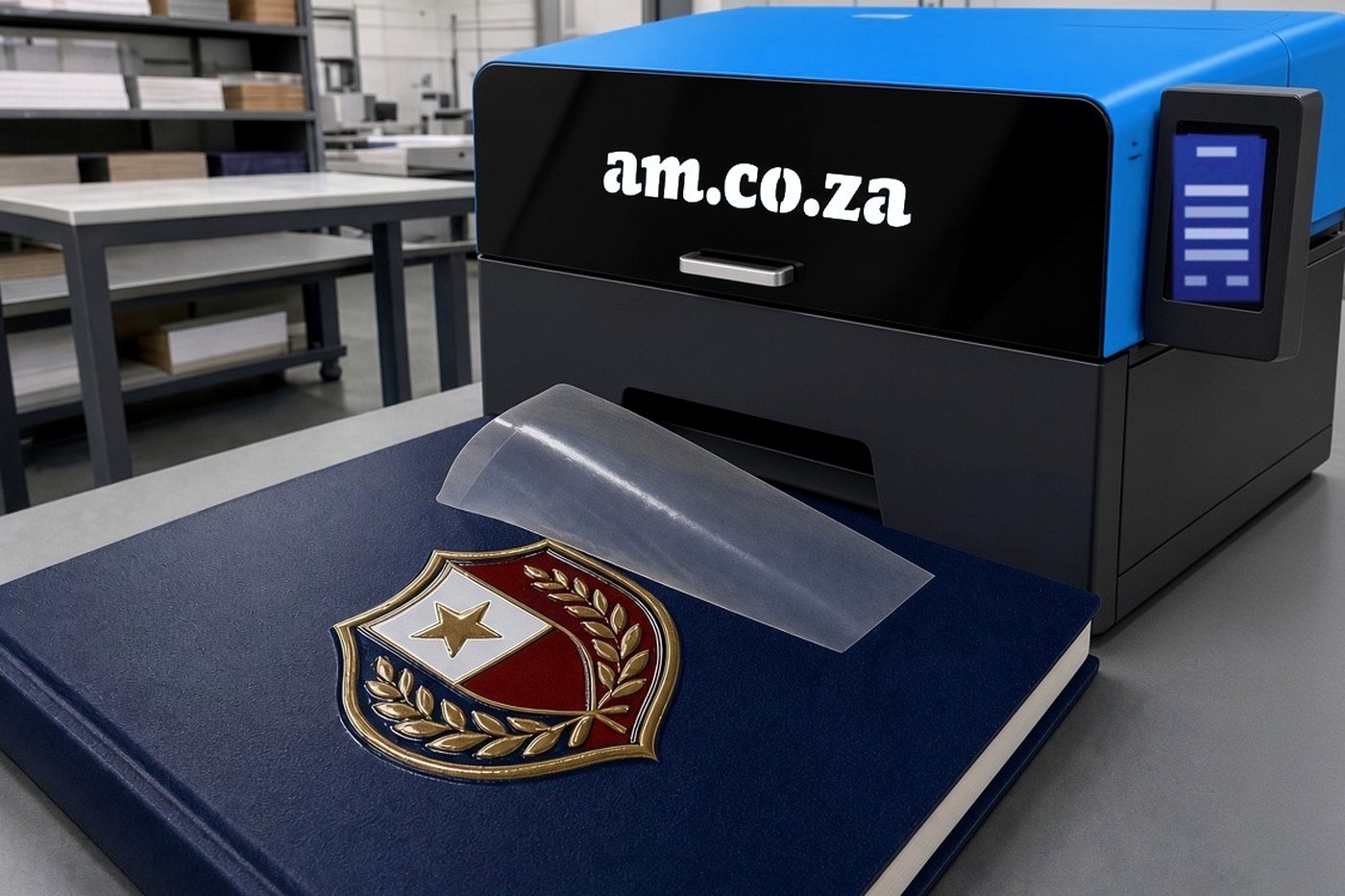
The letters stand for ultraviolet direct to film. The crest is printed onto a carrier film in three layers: a white base, the colour artwork on top of it and a clear varnish over everything. UV lamps cure each pass as it prints, and a laminator then covers the print with a transfer film. In the bindery the backing is peeled away, the crest is placed on the cover and pressed down, and the top film lifts off to leave only the printed badge on the board.
Because nothing is printed straight onto the book, the cover stays untouched until the crest is ready, and a misprint costs a strip of film rather than a finished case.
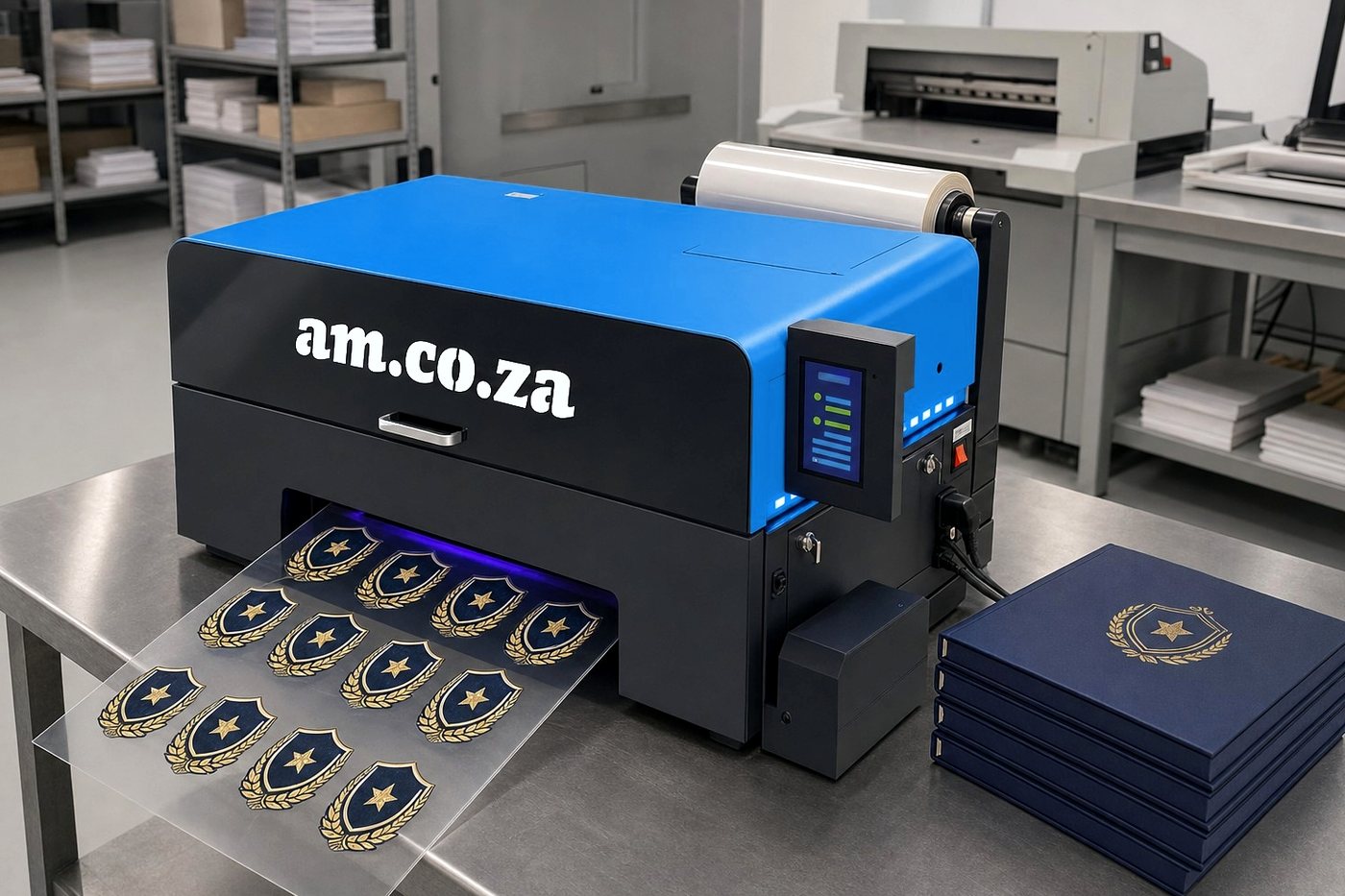
The white layer does more work than it seems. On a dark navy cover, colour printed straight onto the cloth would sink in and look dull, so the white base keeps the reds and golds bright. The varnish adds a glossy, hard finish that gives the crest visible depth and helps it resist scratches from years on a shelf.
“Crest artwork arrives in every possible state, from a vector file to a photo of the badge. We redraw it where needed and build the white and varnish as separate layers, so the colour has a solid base and the gloss sits only where the design calls for it.”
Johan van der Merwe, Prepress Supervisor
The printer and inks behind it
The machine is the A3 UV-DTF printer with built-in laminator from AM.CO.ZA, a machinery supplier. It is a desktop unit with a 300 mm A3 print area on a 400 mm roll, a sealed Epson DX7 printhead and separate tanks for CMYK, white and varnish. Two air-cooled UV lamps cure the ink, the laminator heats to a maximum of 100 °C, and the printer runs on household 220V power. InkRIP software comes with it, and that is where Johan sets up the layer files.
We run AM.CO.ZA’s own UV-DTF white ink and UV-DTF varnish ink in it. The printer stirs and circulates the white to stop the titanium dioxide pigment settling, and we still shake each bottle before pouring and agitate the tank every day, as the ink instructions ask. The white ink is rated for a room between 19 and 28 °C at 30 to 80% humidity, which is the range we hold the bindery to.
For a broader look at what AM.CO.ZA supplies, the AM.CO.ZA guide is a useful overview.
Two clips that helped us plan
Before we changed anything in the bindery, we watched AM.CO.ZA’s videos of this printer at work.
- Artwork going onto film, filmed on the same A3 model we use. It shows the printed film coming off the machine ready for transfer, the same stage our crest sheets go through.
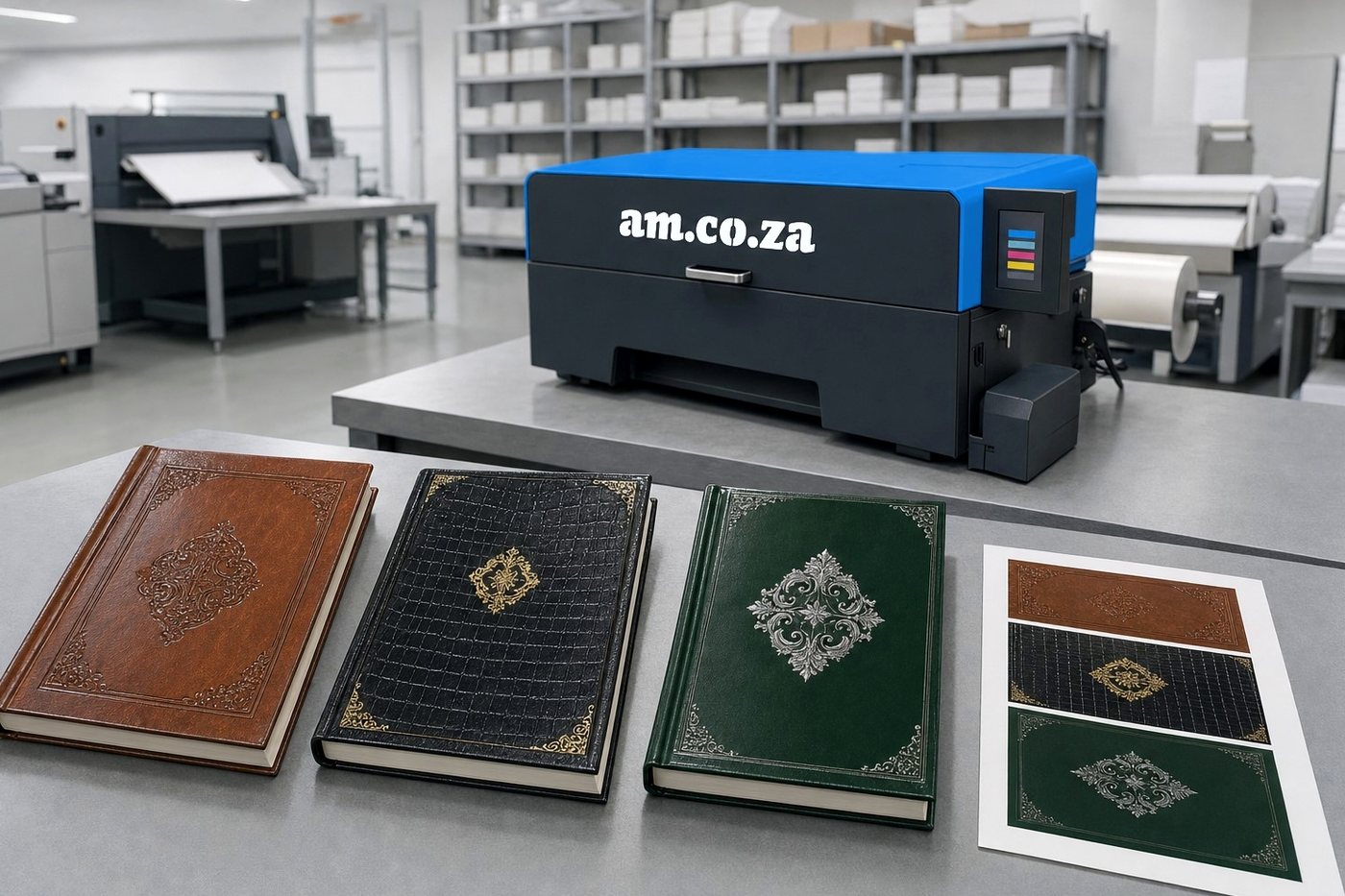
- The leather look video gave us the idea for leather-grain panels on special editions.
From artwork to a packed carton
A crest job follows four steps alongside our normal hardcover book production:
- Artwork and proof. Prepress prepares the crest file and the client approves a printed sample on a spare cover board.
- Print and laminate. The crests are printed in rows across the film and laminated on the same machine.
- Apply and press. Each case sits against a placement jig cut for that cover size, so the crest lands in the same spot on every copy.
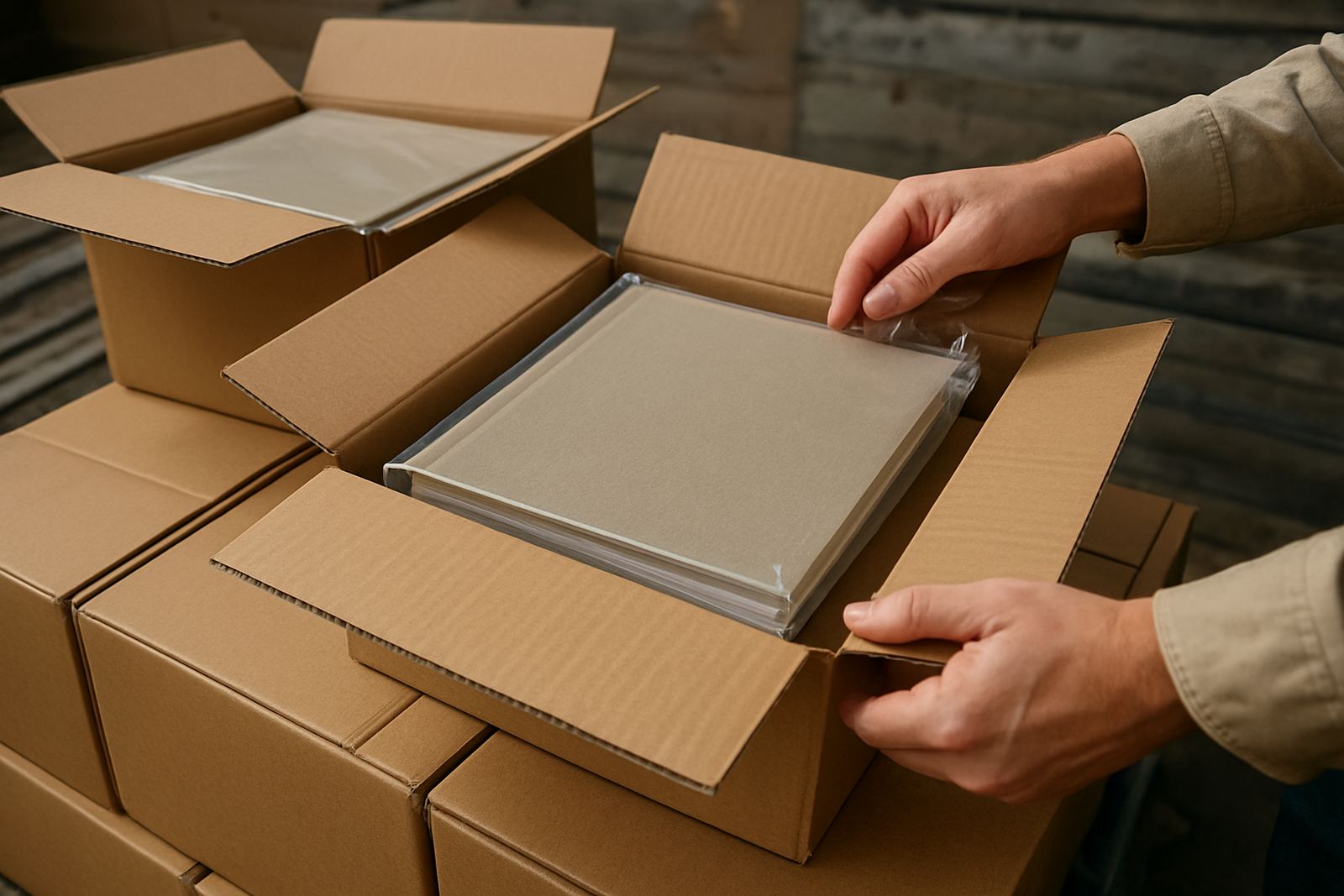
- Inspect and pack. Every cover is checked under raking light for lifted edges before the books are boxed.
“Every format gets its own plywood guide board. The case drops into the corner, the crest goes on, and the first copy and the five hundredth line up the same way.”
Farieda Adams, Bindery Coordinator
Finished books then go out through our usual dispatch from Industria.
Who this finish suits
Yearbooks for schools are the obvious fit, but the same crest or logo treatment works on commemorative editions for independent authors and on presentation copies of annual reports for organisations. Our Sandton school yearbook and Centurion hardcover edition projects show the kind of books it can be added to.
“We keep a finished yearbook in our meeting room. When a school asks about the raised crest, I hand it over and let them run a thumb across the badge.”
Siyanda Ramaboa, Client Services Lead
Browse our services, read more in the print journal, meet the team, or send your crest artwork and print run through our contact form.
Key facts
| Client type | Schools |
|---|---|
| Cover | Navy leatherette |
| Embellishment | Raised crest |
| Ink build | Three layers |
| Print area | 300 mm |
| Placement | Bindery jig |