
What Saddle Stitching Is Best Used For
Saddle stitching is ideal for publications that sit comfortably within a slimmer page count and need to move quickly from press to dispatch. It works well for magazines, event guides, product booklets, training manuals, school publications, newsletters and short-run catalogues. If your content changes often, or you need copies sent to multiple towns at once, this finish keeps the job straightforward and cost-conscious.
Most saddle stitched jobs are printed on uncoated or coated paper in A4, A5 or custom sizes, then folded, nested and stapled through the spine with wire staples. The result is a booklet that opens neatly and holds together through handling. For many publishers, the main benefit is speed: fewer finishing stages, less glue and a quicker path to packing and delivery.
- Suitable for 8 to 64 pages, depending on paper stock and page layout
- Common sizes include A4, A5 and custom trim sizes
- Good for magazines, event programmes, manuals and mailers
- Works well for short runs and repeat print jobs
What We Include In The Finishing Run
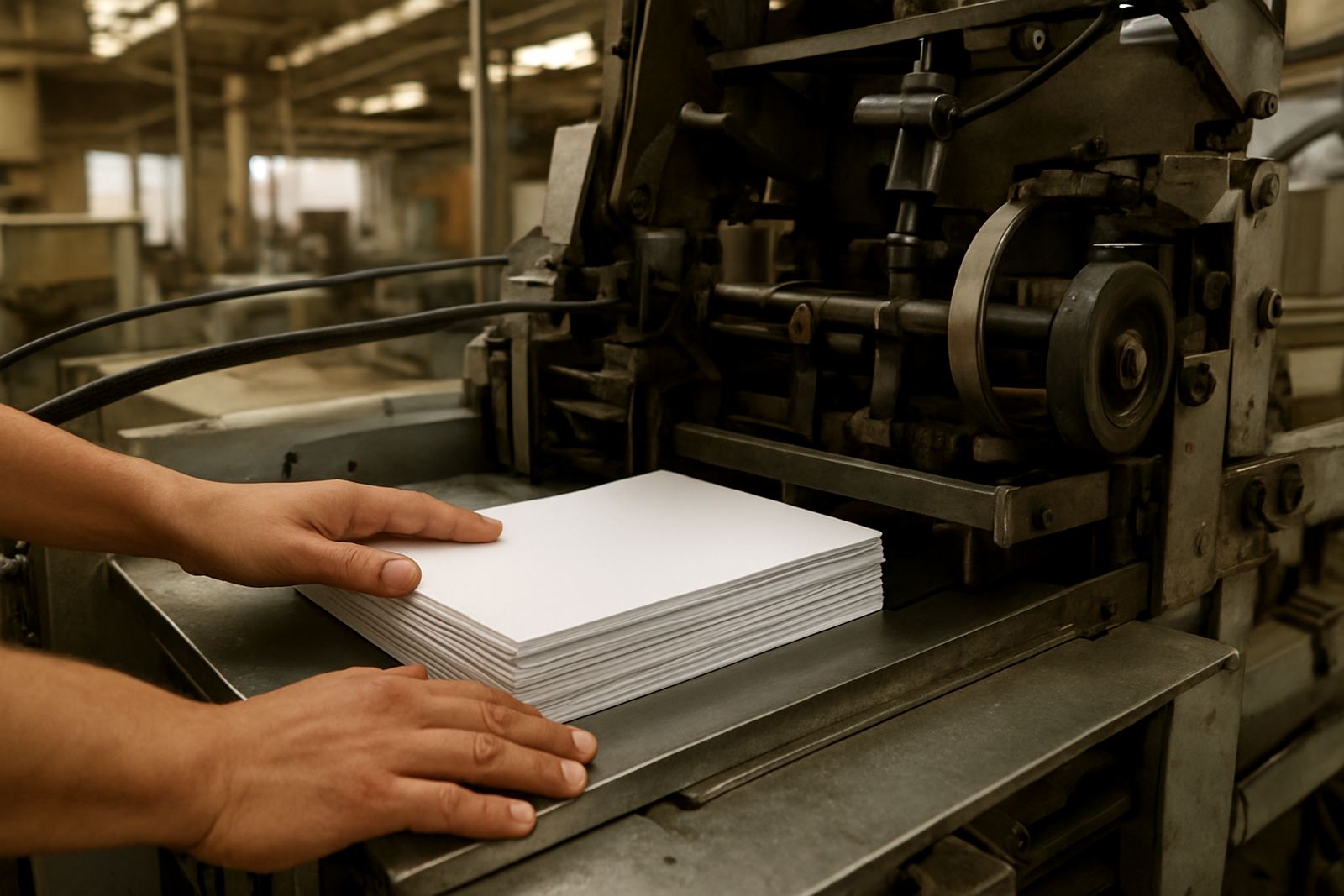
Our saddle stitching service covers the full finishing sequence, not just the stapling itself. We check the page order, fold signatures accurately, stitch on the spine line and trim the final booklet to size. If the job needs cover lamination, folding marks, barcode placement or pack splitting for different branches, those requirements are set up before finishing starts.
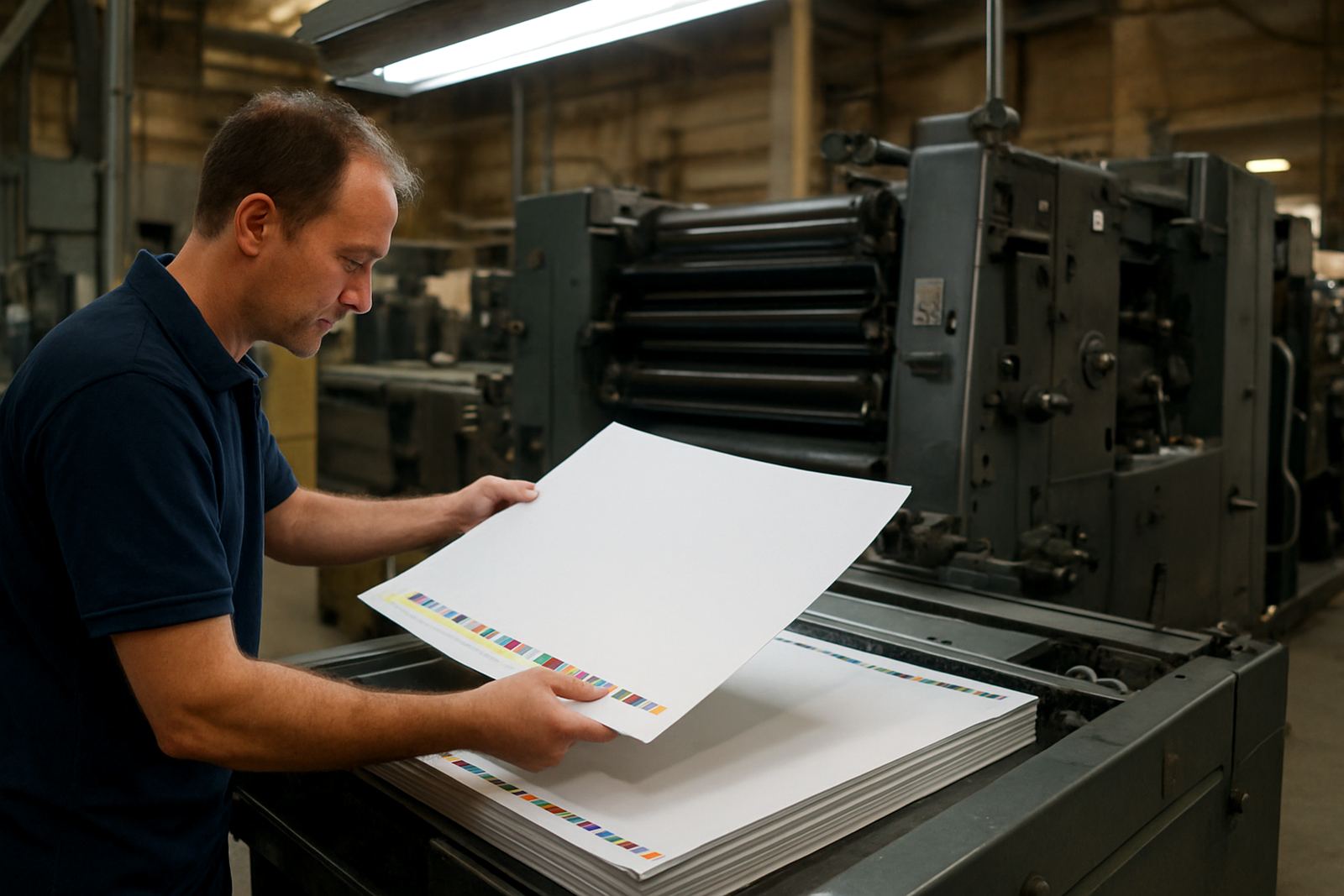
For publications that need a cleaner presentation, we can also combine saddle stitching with prepress checks and colour proofing before the run begins. That helps avoid page creep, text too close to the spine, or images that lose detail after trimming. Our bindery team checks that the spine, margins and image bleeds are suitable for the chosen format before the job goes to the finishing line.
- Page collation and signature checking
- Folding, wire stitching and final trim
- Cover alignment and registration checks
- Optional lamination, packing and dispatch prep
How The Saddle Stitching Process Works
Most jobs begin with a file and layout check. Our prepress team reviews page count, pagination, bleeds, spine allowance and image quality before print starts. Once the printed sheets are ready, they are folded into sections and arranged in the correct sequence. Two or more staples are then placed through the fold line, depending on the size and thickness of the booklet.
After stitching, the booklet is trimmed on three sides for a clean finish and consistent size. If the job is travelling to publishers in Pretoria, Sandton or further afield, packing is arranged so the booklets stay flat and neat in transit. We also account for Johannesburg conditions like dust, winter dryness and the occasional load-shedding disruption by planning the finishing schedule carefully, so the handover stays on track.
- 1. File and pagination check
- 2. Print and fold the sheets into signatures
- 3. Stitch through the spine with wire staples
- 4. Trim the booklet to final size
- 5. Pack for local collection or nationwide delivery
Turnaround Times For Publishers And Businesses
Turnaround depends on page count, paper choice, quantity and whether the job needs proofing or special finishing before stitching. Slim booklets with approved artwork can move quickly, while larger magazine runs or jobs with multiple paper types need a little more planning. For repeat publications, we can work to a regular production cycle so your issue lands on time each month or quarter.
In many cases, the quickest jobs are those where the artwork is final, the page order is confirmed and the client has already approved the proof. We do our best to keep communication direct and practical, because a missed page or a late amendment can hold up the whole run. If you need distribution to Johannesburg Central, Midrand, the East Rand or beyond, we build dispatch timing into the production plan from the start.
- Fastest for small, approved jobs with simple finishes
- More time needed for thicker booklets, coatings or custom trims
- Repeat work can be scheduled around monthly issue dates
- Dispatch timing is planned for regional and nationwide delivery
Pricing Factors That Affect A Saddle Stitch Job
Saddle stitching is usually one of the more economical binding options for slimmer publications, but the final price depends on a few practical details. Page count has the biggest effect, followed by paper weight, print quantity, colour requirements and any extra finishing such as lamination or die cutting. A 16-page A5 booklet with a single cover stock will price very differently from a 48-page magazine with gloss covers and multiple dispatch points.
We quote based on the real production requirements, not vague estimates. That means we look at the artwork, the final trim size, how many copies are needed and whether the run is a once-off or a regular issue. If you are printing for schools, churches, trade events or corporate clients, we can often suggest a more efficient spec that still keeps the publication neat and readable. No need for overspending on a binding method you don’t need, especially when the page count is still light enough for stitches.
- Page count and trim size
- Paper stock for inner pages and cover
- Quantity and number of delivery points
- Extra work such as lamination or special packing
Keeping Your Booklets Neat After Printing
Although saddle stitched publications are straightforward, they still need sensible handling after print. Staples can sit under pressure if the booklet is overfilled, paper can absorb moisture in coastal areas, and stacked cartons can pick up dents during storage. For clients printing regularly, it helps to review the specification every few issues so the binding still suits the content and thickness. That small check can prevent page drift, rough trimming or a cover that pops open at the spine.
We recommend a maintenance-style review for recurring publications, especially if your page count changes from issue to issue. As a general guide, check the format before each new print cycle and confirm the stitch allowance if you add or remove pages. For higher-volume magazines, a monthly review of the layout, cover weight and fold alignment is usually enough. If the publication is stored in hot or humid spaces, or moved between offices and depots, keep cartons flat and dry so the finish holds its shape. A bit of planning now avoids a reprint later.
Key facts
| Binding method | Wire staples through the fold line |
|---|---|
| Best suited to | Slim booklets, magazines, programmes and short catalogues |
| Typical page range | 8 to 64 pages depending on stock and layout |
| Common sizes | A4, A5 and custom trim sizes |
| Finishing options | Trim, lamination, packing and dispatch |
| Service area | Industria, Johannesburg and nationwide delivery |